


Introduction: When the Fuel Pump Becomes the Enemy
Pakistan spends roughly $16 billion annually on petroleum imports — a sum so staggering it consumes the bulk of the country’s export earnings and has been a structural contributor to every balance-of-payments crisis this nation has endured since the 1970s. While economists debate currency floors and IMF tranches, a quieter, more durable revolution is underway on the Lahore–Islamabad Motorway, in the parking lots of DHA Karachi, and along the congested arteries of Faisalabad: electric vehicles are no longer aspirational curiosities. They are pulling up to office buildings, charging overnight in garages, and — critically — covering distances that were, until very recently, the exclusive domain of petrol-powered cars.
But here is the thing no PakWheels forum thread tells you plainly enough: not all EVs are built for Pakistan’s punishing reality. A claimed CLTC range of 400 km in a Shanghai testing lab can shrink to a nervous 260 km when you factor in 42°C summer heat in Multan, the stop-start brutality of Karachi’s Shahra-e-Faisal, and the aggressive air-conditioning that is not optional — it is survival. Single-charge mileage, adjusted for Pakistani conditions, is the single most decisive purchase criterion in this market. Everything else — interior quality, ADAS, brand prestige — is secondary to the question: Will this car make it from Lahore to Gujranwala and back without inducing a panic attack?
“The most dangerous four words in Pakistani motoring used to be ‘I’ll find petrol somewhere.’ In 2026, the most liberating four words are becoming ‘I charged it last night.'”
This article ranks the top 10 pure battery-electric vehicles (BEVs) available in Pakistan in 2026 by their real-world, Pakistan-adjusted single-charge range. We exclude PHEVs and REEVs (though we note them for comparative context). We draw on verified specs, Pakistani owner community data from PakWheels forums, international WLTP benchmarks, and an on-the-ground analysis of what these cars actually deliver on our roads, in our heat, behind our traffic.
The backdrop matters enormously: Pakistan’s NEV Policy 2025–2030, officially launched in June 2025, has set a target of 30% of new vehicle sales being electric by 2030, rising to 50% by 2040 and a full zero-emission fleet by 2060. The government has committed Rs 9 billion in subsidies for FY2025–26, mandated oil marketing companies to convert 10% of filling stations into EV charging points, and set a national fast-charging tariff of Rs 39.7 per kWh — all signals that EV infrastructure is no longer entirely hypothetical. The question is no longer if Pakistan’s EV future arrives. The question is which car gets you furthest on the charge you already have.
Let us begin.
The Pakistani Range Adjustment: A Methodology Note
Before the rankings, a transparency note on methodology. All claimed ranges in this article are adjusted using what I call the Pakistani Range Discount — a composite deduction accounting for:
- Heat tax: Lithium-ion batteries lose 15–25% efficiency in sustained 35–45°C temperatures
- AC load: Constant air-conditioning draws 3–7 kW depending on the system — a meaningful parasitic load on sub-70 kWh batteries
- Traffic cycles: Stop-start urban driving increases energy draw compared to highway cruising (though regenerative braking partially offsets this)
- Road quality: Vibration loads and sub-optimal tyre pressures on uneven surfaces add 2–5% consumption
Our real-world estimates apply a conservative 25–35% deduction from CLTC figures and a 15–20% deduction from WLTP figures. WLTP (Worldwide Harmonised Light Vehicle Test Procedure) is the more internationally honest standard and is used as the primary benchmark where available.
The Top 10: Ranked by Real-World Pakistan Range
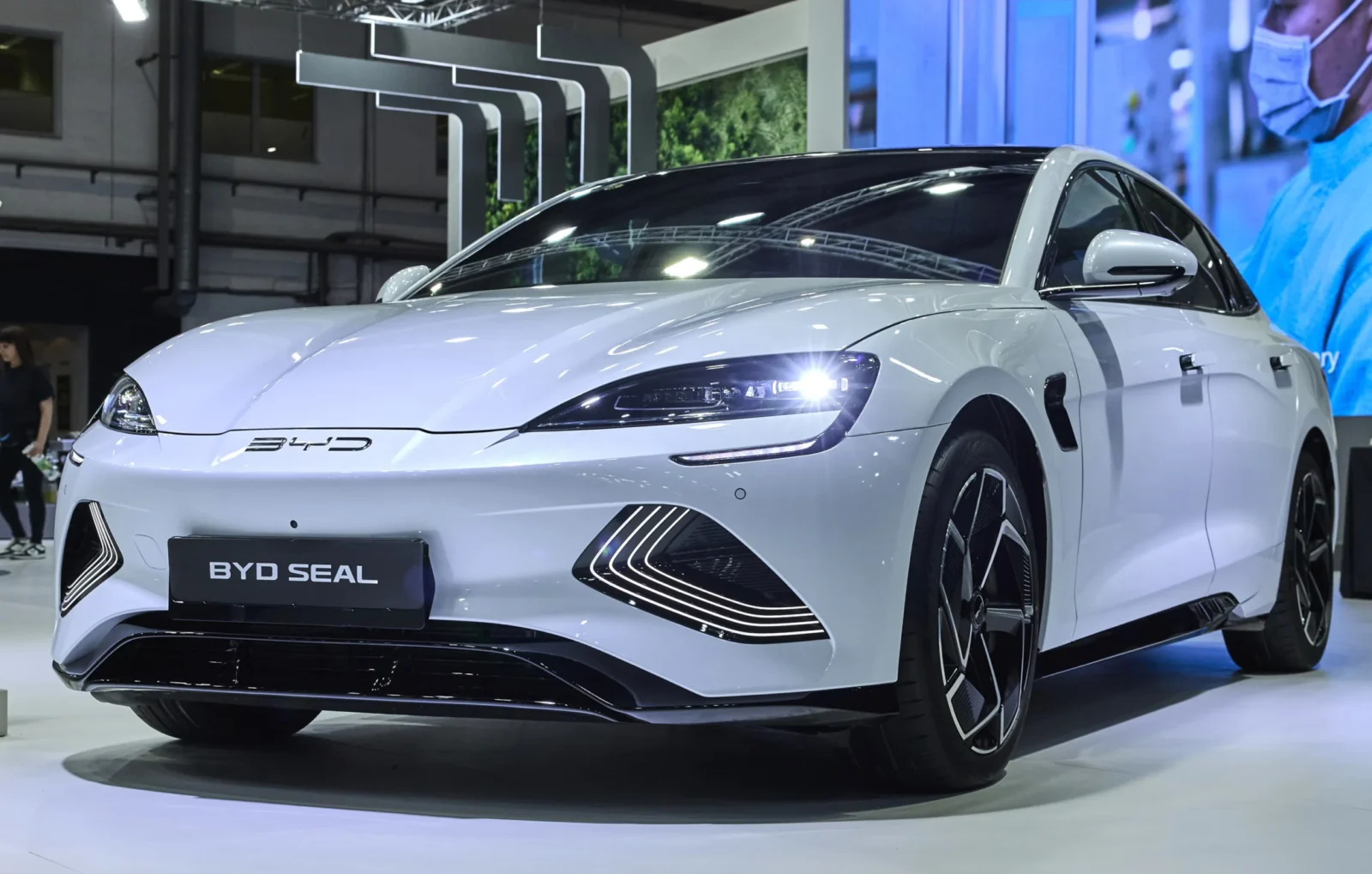
#1 — BYD Seal (Long Range): Pakistan’s Longest-Range Electric Sedan
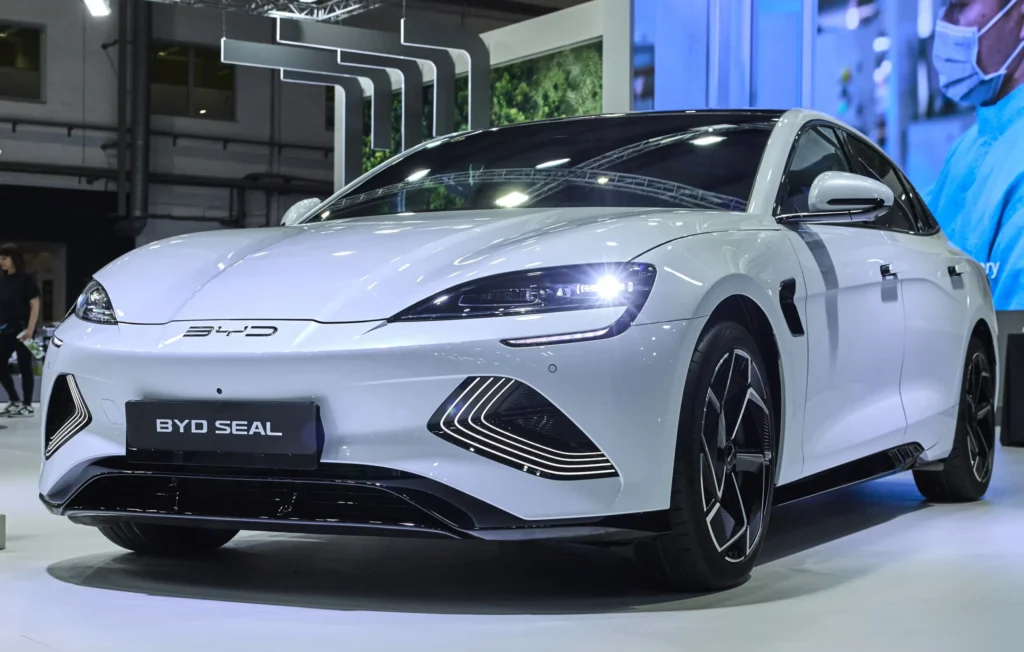
Battery: 82.56 kWh (Blade Battery) | Claimed Range: 650 km (CLTC) | Real-World Pakistan Range: ~450–490 km | 0–100 km/h: 3.8 seconds (AWD) | Fast Charging: 30%–80% in 30 minutes
Price in Pakistan: PKR 1.48–1.70 crore (ex-factory, depending on variant)
If Pakistan has an electric car that makes range anxiety truly obsolete, it is the BYD Seal — and specifically its long-range variant equipped with BYD’s proprietary Blade Battery. The 82.56 kWh pack is not just large; it is structurally innovative. Blade chemistry eschews the traditional cylindrical or pouch cells for a stacked laminate design that improves both energy density and thermal stability — precisely the properties you need when a Karachi July is trying to cook your battery management system.
In Chinese lab conditions, BYD claims 650 km. Discount that aggressively for Pakistan — say 30% for heat, traffic, and AC — and you are still looking at a genuine 450 km of real-world range. Pakistani owners on PakWheels have reported highway runs of 420–460 km in temperate (early morning, pre-summer) conditions. During peak summer in Sindh, expect closer to 400 km with AC on maximum. That is still, by some distance, the longest practical range of any production EV on Pakistani roads today.
The Seal’s 3.8-second 0–100 km/h sprint in AWD configuration is frankly irrelevant to most Pakistani buyers — but the rapid-charging capability is not. A 30-minute top-up at a Level 3 DC fast charger takes it from 30% to 80%, which, given the battery size, restores roughly 270 km of range. As Pakistan’s motorway fast-charger network scales toward the government’s promised 40 Level 3 stations, the Seal becomes genuinely intercity-capable.
Pakistan verdict: The undisputed range king. The price point (PKR 1.48–1.70 crore) limits it to upper-tier buyers, but for anyone who regularly drives the Lahore–Islamabad M-2 or the long Sindhi highway corridors, the Seal pays for itself in avoided fuel anxiety — and eventually, in petrol savings.
Pros: Best real-world range in Pakistan, Blade Battery thermal resilience, rapid DC charging, world-class build quality, BYD’s expanding Karachi service footprint Cons: Premium price, still limited DC fast-charger availability on Pakistan’s major corridors, sedan format not suited for rural road conditions
#2 — Deepal L07: The Smart Sedan That Went to Engineering School with Huawei
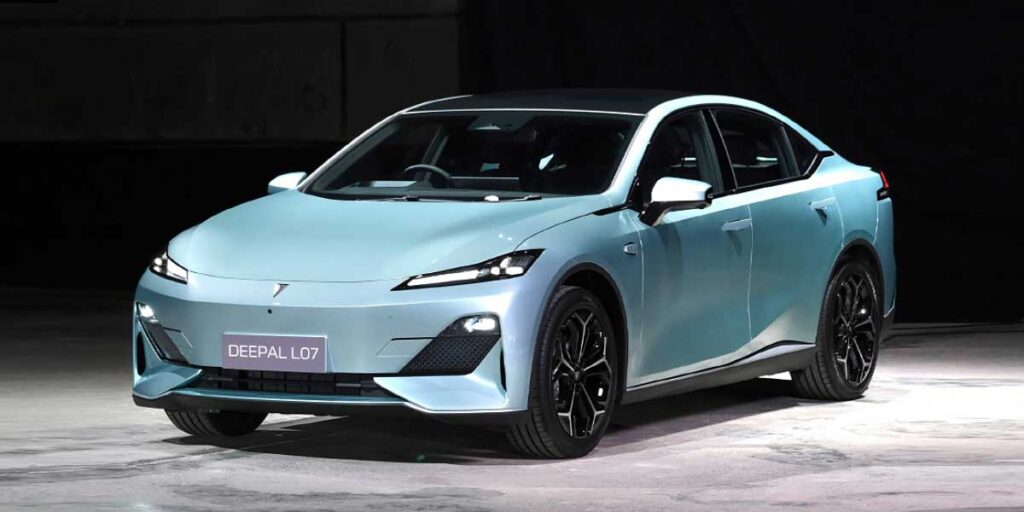
Battery: 66.8 kWh (CATL) | Claimed Range: 540 km (CLTC) | Real-World Pakistan Range: ~380–420 km | 0–100 km/h: 5.9 seconds | Fast Charging: 30%–80% in 35 minutes
Price in Pakistan: PKR 1.375–1.40 crore (ex-factory, as of April 2026)
There is a useful rule of thumb in Chinese EV evaluation: when Huawei and CATL both show up to the party, pay attention. The Deepal L07 — a product of the Changan-Deepal joint venture developed in collaboration with Huawei’s intelligent systems division and CATL’s battery technology — is one of the most technologically sophisticated cars to have landed on Pakistani soil at anything approaching an accessible price for its segment.
The 66.8 kWh CATL pack delivers a claimed 540 km. Adjust for Pakistani conditions and you land at roughly 380–420 km — considerably less than the BYD Seal but at a lower price point, and with a trick the Seal cannot match: Huawei’s HarmonyOS-powered 14.6-inch touchscreen, which is among the most responsive and thermally stable infotainment systems in any car sold in Pakistan today. In a country where Chinese competitors sometimes ship with laggy, sun-washed displays, the Huawei-powered system is a meaningful differentiator.
The L07’s drag coefficient of 0.225 Cd is genuinely impressive for a fastback sedan of its dimensions (4,820 mm long), and this aerodynamic efficiency is a direct contributor to real-world range. Less drag means less energy spent pushing through air at motorway speeds. On the Lahore–Islamabad M-2, where cruising at 110–120 km/h is standard, the L07’s aerodynamics work measurably in your favour.
Pakistan verdict: The most technologically compelling long-range EV sedan in the PKR 1.3–1.4 crore segment. It is not the absolute range leader, but the Huawei tech integration, CATL battery reliability, and competitive pricing relative to the BYD Seal make it a genuinely smart choice for Islamabad’s diplomatic enclave and Lahore’s tech-professional class.
Pros: CATL battery, Huawei HarmonyOS infotainment, outstanding aerodynamics, 8-year/240,000 km battery warranty, compelling design Cons: CLTC range inflation is significant — real-world returns require realistic expectations, smaller battery than BYD Seal, limited service network outside major cities
#3 — Deepal S07: The Long-Range SUV That Rewrote Pakistan’s Expectations
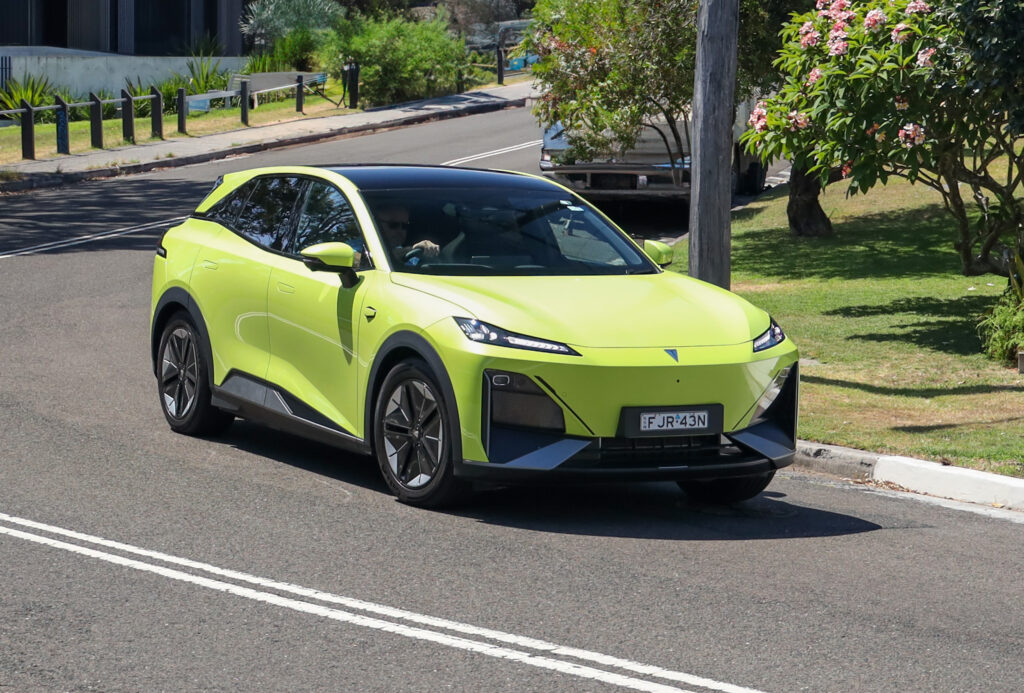
Battery: ~71 kWh (CATL, estimated) | Claimed Range: ~450 km (CLTC) | Real-World Pakistan Range: ~330–370 km | Body Style: Compact Electric SUV | ADAS: Full L2 driver-assistance suite
Price in Pakistan: Competitive mid-tier pricing (PKR 90 lakh–1.15 crore range, dealer-confirmed April 2026)
If the L07 is Deepal’s precision instrument, the S07 is its instrument for the masses — or at least, for the upper-middle-class Pakistani family that needs five seats, reasonable ground clearance, and enough range to drive from Islamabad to Murree and back without a second thought. The S07 arrived in Pakistan as Changan’s first serious push into the premium electric SUV category, and it has succeeded in carving out a distinct identity.
The claimed 450 km under CLTC translates to roughly 330–370 km in real Pakistani conditions — enough for most intercity day trips without charging anxiety. The S07’s relatively high ground clearance, compared to the low-slung Seal and L07, makes it far more practical on the B-roads and semi-urban streets that Pakistani families actually navigate between DHA Karachi and Hawke’s Bay, or between Gulberg Lahore and the motorway.
What distinguishes the S07 in competitive context is its positioning gap-filler function in Pakistan’s EV market. It sits above the MG ZS EV in technology and below the Hyundai Ioniq 5 in price, filling a sweet spot that no other pure BEV occupies with comparable range. First deliveries to Pakistani customers in late 2025 generated enthusiastic PakWheels owner reviews.
Pakistan verdict: The best long-range electric SUV for buyers who cannot justify BYD Seal or Ioniq 5 money but refuse to compromise on range or SUV practicality. For Islamabad-based families and Lahore commuters who make weekend runs to northern areas, the S07 is arguably the most practically compelling vehicle on this list.
Pros: SUV versatility with competitive range, full L2 ADAS, Changan’s growing Pakistan service network, competitive pricing, CATL cells Cons: CLTC range claims require significant Pakistan-adjusted discounting, boot space moderate relative to ICE equivalents, AC performance under extreme heat needs real-world validation
#4 — MG4 EV: The European-Tested All-Rounder That Packs a Punch
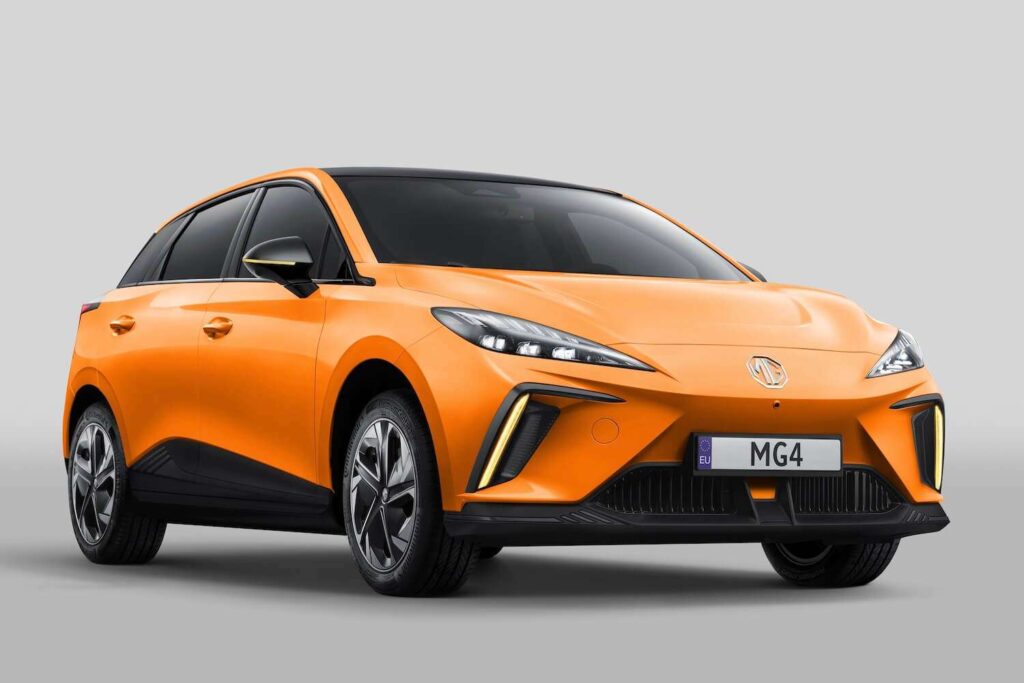
Battery: 64 kWh (Standard) / 77 kWh (Long Range) | Claimed Range: up to 450 km (WLTP, Long Range) | Real-World Pakistan Range: ~340–380 km | Fast Charging: DC fast charging support | Safety: 5-Star Euro NCAP
Price in Pakistan: PKR 85–1.10 crore (variant-dependent, dealer pricing April 2026)
Here is a detail competitors would prefer buyers not examine too closely: the MG4 EV received a 5-Star Euro NCAP safety rating — a distinction that most EVs sold in Pakistan have not earned, and that deserves to weigh significantly in family purchase decisions. The MG4 was engineered for European markets first, which subjects it to a far more rigorous real-world testing regime than models optimised purely for Chinese domestic sales.
The 77 kWh long-range variant’s WLTP claim of 450 km is the most honest range figure of any car on this list, because WLTP (unlike CLTC) was designed to reflect real driving. Adjust for Pakistan’s heat and AC load and you still land at 340–380 km — strong numbers, and arguably more trustworthy than competing models’ CLTC-derived estimates.
MG’s local after-sales infrastructure in Pakistan — with service centres in Karachi, Lahore, Islamabad, Peshawar, and Faisalabad — is a genuine competitive advantage over newer entrants. Range anxiety is one problem. Battery fault anxiety, in a country with patchy EV technician training, is another. MG’s established presence meaningfully addresses the second.
Pakistan verdict: The safest bet (literally — Euro NCAP says so) for buyers who want strong range, genuine after-sales support, and a car that has been stress-tested by European regulators rather than Chinese marketing departments. Slightly less range than the Seal and L07, but more trustworthy headline figures.
Pros: 5-Star Euro NCAP, WLTP (not CLTC) rated range, DC fast charging, MG’s established Pakistan service network, globally-validated product Cons: Price creep in Long Range variant, MG brand perception still evolving in Pakistan’s premium segment
#5 — Hyundai Ioniq 5: The Premium Choice With Korean Reliability
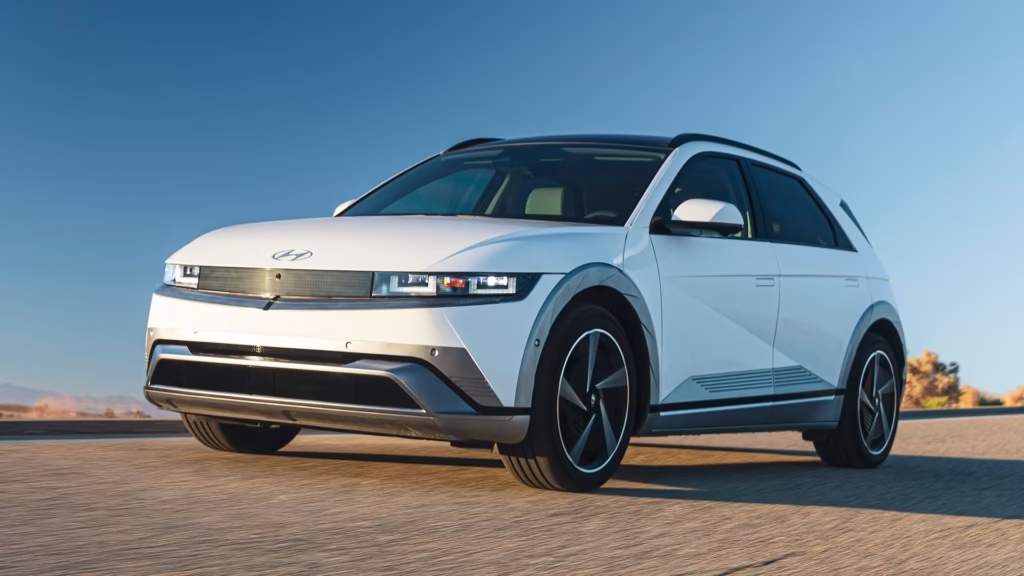
Battery: 77.4 kWh | Claimed Range: 385 km (WLTP) | Real-World Pakistan Range: ~300–330 km | Ultra-Fast Charging: 800V architecture, 10%–80% in 18 minutes | 0–100 km/h: 5.1 seconds (RWD)
Price in Pakistan: PKR 1.65 crore+ (ex-factory, Karachi)
The Ioniq 5 is the car that told the world Korean EVs could be beautiful. Its pixelated retro-futurist exterior, derived from Hyundai’s 45 concept, won design awards across Europe and Asia. In Pakistan, it wins the eyes of every person who sees it parked outside an Islamabad café — it is genuinely, arrestingly distinctive.
Technically, its distinguishing feature is Hyundai’s 800V electrical architecture — the same ultra-fast charging system found in the Porsche Taycan, implemented at a fraction of the price. An Ioniq 5 can charge from 10% to 80% in approximately 18 minutes at a compatible 350 kW charger. Pakistan has zero such chargers today. But as ultra-fast charging infrastructure spreads along CPEC corridors and motorways over the next three years, the Ioniq 5 owner will suddenly have an enormous advantage.
The WLTP range of 385 km is honest. In Pakistan’s summer conditions, expect 300–330 km — not the longest on this list, but sufficient for most intercity use cases and easily enough for daily Lahore or Karachi commuting.
Pakistan verdict: For the buyer who views their car as a statement of taste and a practical daily driver, the Ioniq 5 remains aspirationally compelling. Its 800V architecture future-proofs it against Pakistan’s charging infrastructure evolution. The price is premium, but so is the product.
Pros: 800V ultra-fast charging (future-proofing), stunning design, WLTP-certified range, Hyundai’s global reliability track record, Vehicle-to-Load (V2L) feature (your EV can power appliances during load-shedding — highly Pakistan-relevant) Cons: Highest price-to-range ratio on this list, no local assembly, limited Hyundai EV service centres in Pakistan, 800V advantage unrealizable until infrastructure catches up
Pakistan-specific insight: The Ioniq 5’s V2L (Vehicle-to-Load) feature — which allows the car to export power to external devices at up to 3.6 kW — is unexpectedly relevant in a country where electricity load-shedding can last 8–12 hours in some districts. Ioniq 5 owners in Lahore have reportedly used it to power fans, lights, and phone charging points during power outages.
#6 — BYD Atto 3: The Electric SUV That Started Pakistan’s Premium EV Conversation
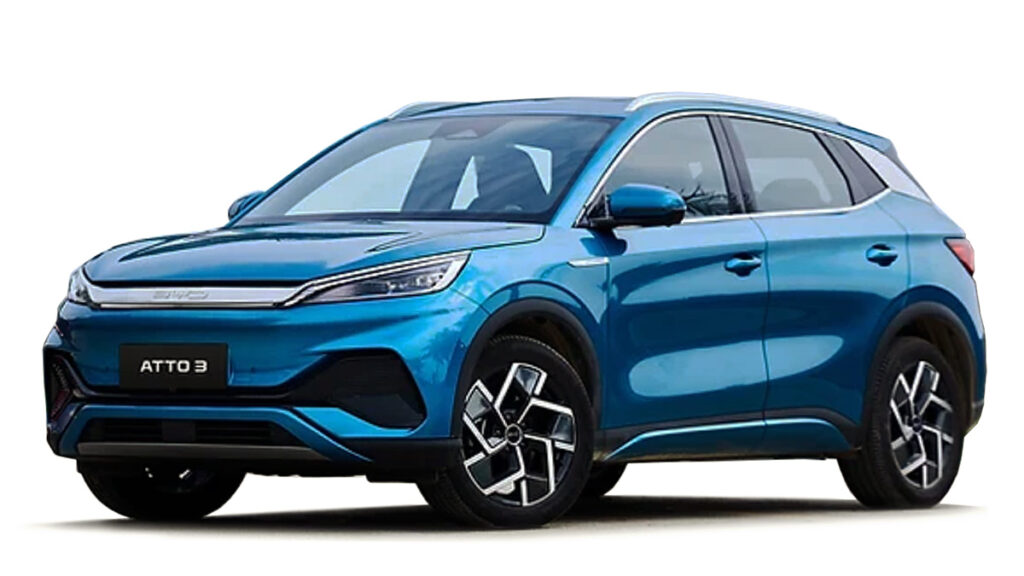
Battery: 60.48 kWh (Blade Battery) | Claimed Range: 480 km (CLTC) | Real-World Pakistan Range: ~310–350 km | Fast Charging: DC fast charging supported | Body Style: Compact Electric SUV
Price in Pakistan: PKR 99 lakh – 1.05 crore (ex-factory)
The BYD Atto 3 deserves credit as the car that, more than any other, shifted the conversation among Pakistani upper-middle-class buyers from “should we consider an EV?” to “which EV should we get?” It arrived in Pakistan before most of its competitors, brought the Blade Battery’s thermal credibility, and offered a genuinely well-built interior at a price point that made comparisons to similarly-priced ICE SUVs uncomfortable — for the ICE segment.
The 60.48 kWh Blade pack delivers a claimed 480 km under CLTC. Real-world in Pakistan — especially in Karachi’s coastal heat — lands closer to 310–350 km. That is solid, if not spectacular. What the Atto 3 offers is brand credibility: BYD is now the world’s largest EV manufacturer by volume, having overtaken Tesla in 2024. That corporate depth matters when you are considering an 8-year battery warranty in a country where most EV after-sales frameworks are still being built.
BYD has committed to local assembly in Karachi — a development that, when fully operational, should meaningfully reduce the Atto 3’s price and expand its accessible market.
Pakistan verdict: The EV that broke Pakistan’s psychological barrier against premium electric mobility. Its real-world range is now surpassed by several newcomers on this list, but its brand trust, Blade Battery resilience, and BYD’s growing local assembly commitment keep it firmly in the top six.
Pros: Blade Battery thermal stability, BYD’s global scale and warranty credibility, proven track record in Pakistan, DC fast charging, compelling interior quality-per-rupee Cons: CLTC-to-real-world gap is significant, now faces stiffer competition from Deepal models, price has not yet benefited from promised local assembly cost reduction
#7 — MG ZS EV: The Trusted Workhorse of Pakistan’s EV Fleet
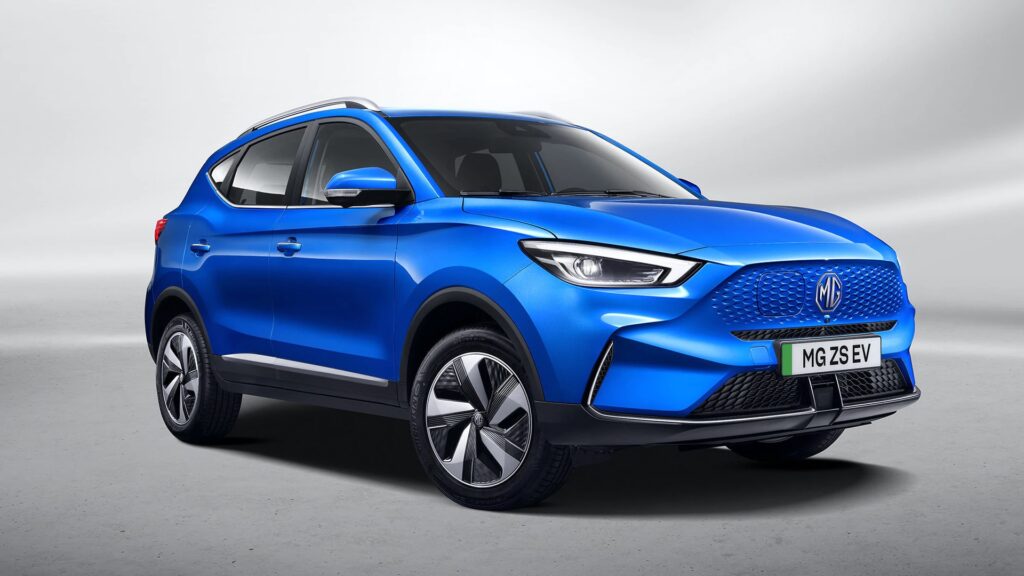
Battery: 72.6 kWh | Claimed Range: 440 km (WLTP) | Real-World Pakistan Range: ~280–320 km | Charging: AC 7kW / DC 76kW | Body Style: Compact SUV
Price in Pakistan: PKR 88–95 lakh (ex-factory, Karachi/Lahore)
The MG ZS EV is to Pakistan’s electric vehicle market what the Toyota Corolla was to its petrol market: not the most exciting option, not the longest-range, not the most technologically advanced — but dependable, widely supported, and implicitly trusted because it has been here the longest and has the service network to prove it.
The updated 72.6 kWh battery delivers a claimed 440 km WLTP — more honest than CLTC figures from competitors. Real-world in Pakistan adjusts that to 280–320 km, which is ample for daily urban use and comfortable for weekend intercity drives of up to 250 km one-way with a single top-up stop. The ZS EV’s AC charging at 7 kW means a full charge from a home wallbox overnight — simple, uncomplicated, Pakistan-friendly.
MG’s service infrastructure across five major cities, with trained EV technicians and a standardised parts supply chain, is a differentiator that becomes critically important when your battery management system needs recalibration at 3 PM in Rawalpindi and the dealer is 15 minutes away rather than three days away.
Pakistan verdict: The rational choice for the buyer who prioritizes after-sales peace of mind over headline specs. If you want maximum range, look up the list. If you want the most reliable ecosystem around your long-range EV in Pakistan’s current infrastructure reality, the ZS EV remains hard to dislodge.
Pros: WLTP (not CLTC) rated, best service network of any EV brand in Pakistan, proven reliability, sensible pricing, AC overnight charging simplicity Cons: Younger competitors now offer better range at similar prices, exterior design is dated versus newer entrants, no 800V fast-charging option
#8 — MG Binguo: Gen-Z’s Range Champion Under PKR 60 Lakh
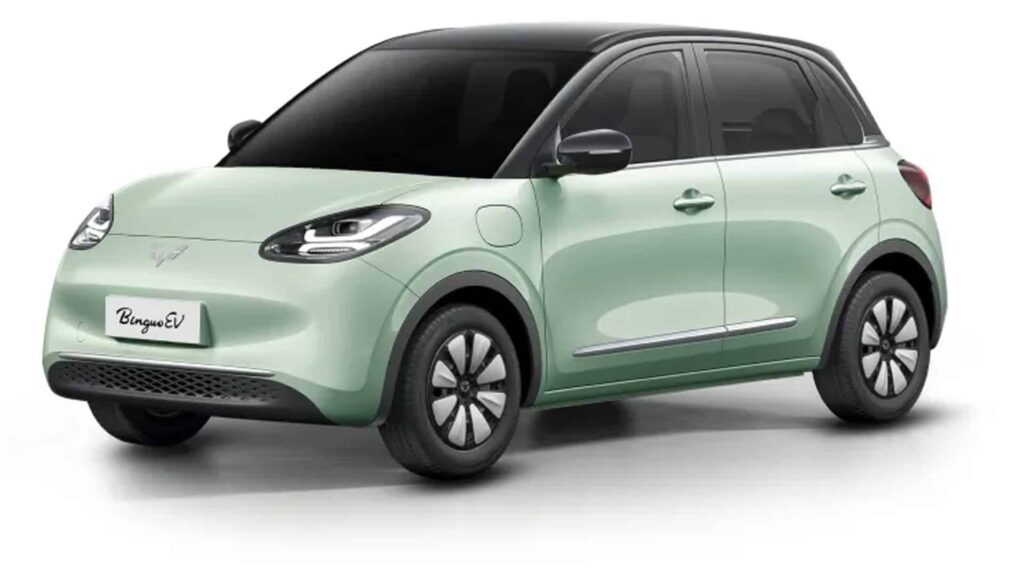
Battery: 49.52 kWh | Claimed Range: ~410 km (CLTC) | Real-World Pakistan Range: ~260–290 km | Body Style: Retro-Modern Hatchback | Fast Charging: DC supported
Price in Pakistan: ~PKR 59.9 lakh (ex-factory)
The Binguo is the car that made young Pakistani professionals — the Uber-Careem generation, the DHA-living, coffee-shop-hopping millennials and Gen-Z urban dwellers — genuinely excited about electric motoring. Its retro-modern styling (think a Fiat 500 filtered through a Shenzhen design school) is unambiguously charming. Its price, at approximately PKR 59.9 lakh, is the most competitive of any range-capable EV hatchback in Pakistan.
In real-world Pakistani driving, the Binguo returns approximately 260–290 km per charge — enough for a full week of urban commuting in Karachi or Lahore with a single overnight top-up. The CLTC claim of 410 km requires a significant Pakistan-adjusted discount, but even the discounted figure comfortably covers every daily-use scenario the typical urban professional faces.
The Binguo currently leads PakWheels’ best-selling EV hatchback segment. For good reason: it combines the longest real-world range in the sub-PKR 60 lakh BEV segment with MG’s service network advantage.
Pakistan verdict: The best range-per-rupee BEV hatchback in Pakistan’s under-60-lakh segment. For urban buyers who do not need intercity range but want the psychological comfort of never sweating a daily commute, the Binguo is the answer.
Pros: Best range in sub-60-lakh BEV segment, retro-modern styling, MG service network, DC fast charging, practical urban sizing Cons: Not a genuine intercity vehicle, CLTC-to-real-world discount is steep, compact form factor limits family utility
#9 — JMEV EV3: The Value Contender That Punches Above Its Price
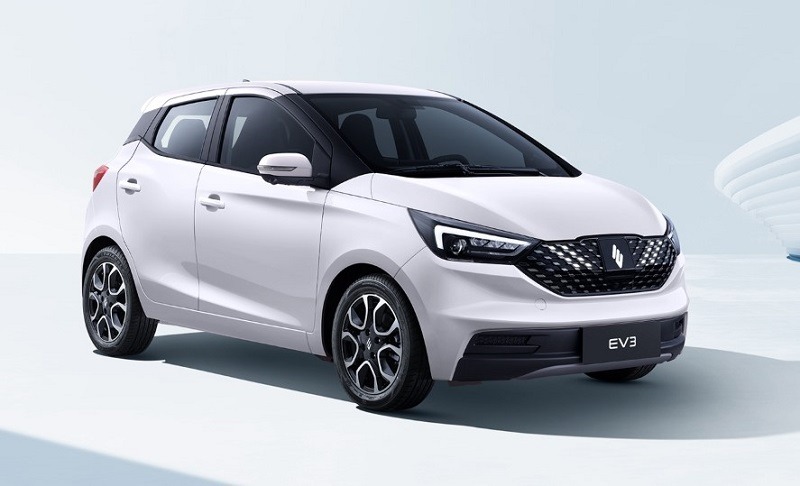
Battery: 45 kWh (estimated) | Real-World Pakistan Range: ~250–270 km | Body Style: Compact Hatchback | Safety: Liquid-cooled motor, high-strength cage body | Backing: Capital Smart Motors
Price in Pakistan: ~PKR 49 lakh (ex-factory)
The JMEV EV3 is the dark horse of this list — a vehicle most casual observers of Pakistan’s EV market have never heard of, distributed by Capital Smart Motors with a quietly competent spec sheet and a price that makes the Binguo look expensive.
At approximately PKR 49 lakh — ten lakh less than the Binguo — the EV3 delivers real-world range of 250–270 km, a liquid-cooled motor (important for Pakistani summer durability), and a high-strength cage body that represents a genuine safety commitment from a brand many buyers are still discovering. It is not glamorous. It does not win design awards. But for the Pakistani buyer whose priority is maximum range per rupee in the sub-50 lakh segment, the EV3 makes a mathematically compelling case.
Capital Smart Motors’ backing provides some distribution and service confidence, though the network is not yet as mature as MG’s.
Pakistan verdict: The rational maximizer’s choice in the sub-PKR 50 lakh segment. If you want the most kilometres per rupee, the EV3 delivers. If you want a broader service network and MG’s brand familiarity, the Binguo costs more. A legitimate choice rather than a compromise.
Pros: Lowest price-per-km-of-range in hatchback segment, liquid-cooled motor, competitive range, Capital Smart Motors backing Cons: Brand recognition still limited, service network less mature than MG, interior quality below Binguo standard at similar real-world range numbers
#10 — Honri Ve: Pakistan’s Home-Assembled Pioneer
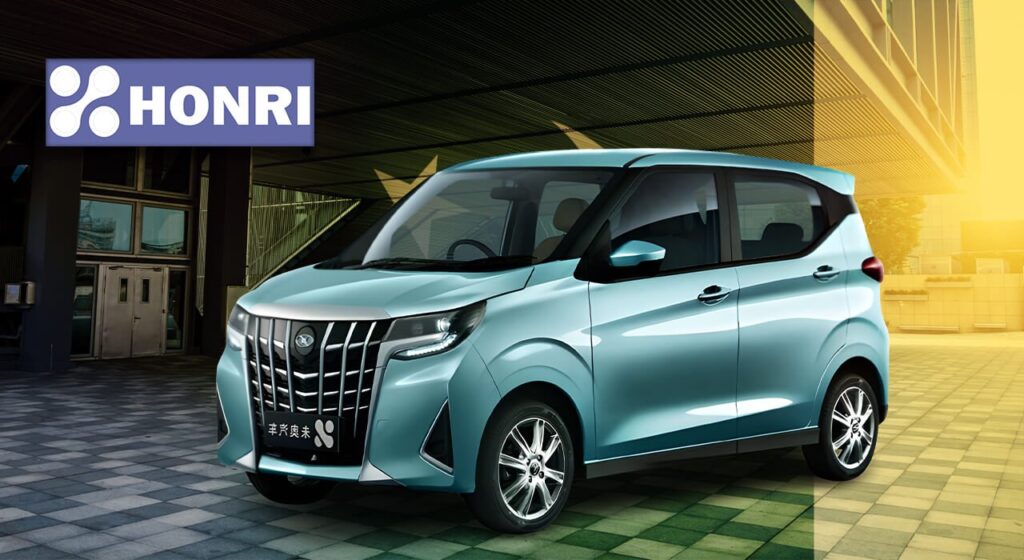
Battery: 38–52.56 kWh (variant-dependent) | Claimed Range: 300 km (CLTC, long-range variant) | Real-World Pakistan Range: ~200–250 km | Assembly: Locally assembled, Lahore | After-Sales: Nationwide network
Price in Pakistan: PKR 39.9–49.9 lakh (variant-dependent)
The Honri Ve occupies a singular position in Pakistan’s EV story: it is the country’s first locally assembled passenger electric vehicle. That distinction is not merely symbolic. Local assembly means lower freight exposure, parts availability that is not subject to import timelines, and a price floor that could eventually compress downward as localization deepens.
Its real-world range — 200–250 km depending on variant and conditions — is the most modest of any vehicle on this list. But for the buyer whose daily round-trip is 80 km or less (which covers the commuting reality of the vast majority of Pakistani urban workers), 200 km of reliable range is not a limitation. It is sufficiency.
The Honri Ve’s nationwide after-sales network is its most powerful competitive argument. In a country where EVs have historically meant imported vehicles with limited service access outside Karachi, Lahore, and Islamabad, the Honri Ve’s distributed dealership model is genuinely democratizing.
Pakistan verdict: Not a range leader but an infrastructure leader — the EV with the best service-network penetration per rupee in Pakistan. For first-time EV buyers in Multan, Gujranwala, Peshawar, or Hyderabad — cities where MG and BYD service centres remain sparse — the Honri Ve may be the only vehicle on this list that is truly practically accessible.
Pros: Local assembly, lowest price of any range-capable BEV in Pakistan, nationwide after-sales, pioneering localization story, accessible financing via local dealers Cons: Shortest real-world range of any car on this list, battery technology less advanced than Chinese imports, range in summer heat requires careful trip planning
Comparative Snapshot: Pakistan’s Top 10 BEVs by Range (2026)
| Rank | Model | Battery (kWh) | Real-World Pakistan Range | Price (PKR, approx) | Best For |
|---|---|---|---|---|---|
| 1 | BYD Seal (LR) | 82.56 | 450–490 km | 1.48–1.70 crore | Long-haul, premium |
| 2 | Deepal L07 | 66.8 | 380–420 km | 1.375–1.40 crore | Tech-forward professionals |
| 3 | Deepal S07 | ~71 | 330–370 km | 90 lakh–1.15 crore | Family SUV, intercity |
| 4 | MG4 EV (LR) | 77 | 340–380 km | 85 lakh–1.10 crore | Safety-conscious families |
| 5 | Hyundai Ioniq 5 | 77.4 | 300–330 km | 1.65 crore+ | Design + future-proofing |
| 6 | BYD Atto 3 | 60.48 | 310–350 km | 99 lakh–1.05 crore | SUV, brand trust |
| 7 | MG ZS EV | 72.6 | 280–320 km | 88–95 lakh | After-sales reliability |
| 8 | MG Binguo | 49.52 | 260–290 km | ~59.9 lakh | Urban hatchback |
| 9 | JMEV EV3 | ~45 | 250–270 km | ~49 lakh | Value maximizer |
| 10 | Honri Ve (LR) | 52.56 | 200–250 km | 39.9–49.9 lakh | First EV, local service |
All real-world range figures are Pakistan-adjusted estimates accounting for heat, AC load, and traffic patterns. CLTC figures discounted 30–35%; WLTP figures discounted 15–20%.
The Policy Architecture Behind the Numbers
Pakistan’s NEV Policy 2025–2030 — officially launched in June 2025 after years of stop-start policy drafting — is the most serious regulatory signal Pakistan has sent to the global EV industry. Its targets are ambitious: 30% of new vehicle sales electric by 2030, 50% by 2040, and 100% by 2060. The policy aims to avoid 4.5 million tonnes of CO₂ emissions by 2030 and projects PKR 800 billion in cumulative savings over 25 years through reduced fuel imports and carbon credits.
The infrastructure commitment is the headline: 3,000 charging stations nationwide by 2030, anchored by 40 Level 3 fast chargers on motorways and the N-5 highway to be completed within six months of policy approval. Oil marketing companies are mandated to convert 10% of filling stations into EV charging points. A standardised commercial charging tariff of Rs 39.7 per kWh has been set — below global averages and designed to make public charging economically compelling versus petrol.
From 2027, all federal government vehicle purchases must be electric — a procurement mandate that, if enforced, will create instant large-volume demand and drive down unit costs through scale.
Pakistan’s grid, currently 40% renewable and projected to reach 60% renewable by 2030, provides an important context here. Every EV charged in Pakistan today draws from a grid that is increasingly powered by domestic hydro, wind, and solar resources — meaning the more EVs charge on the national grid, the more the transport sector’s foreign exchange exposure shrinks.
Where Pakistan Trails India and China
Candour requires noting the infrastructure gap. India has deployed over 12,000 public EV charging stations. China has millions. Pakistan is at approximately 150–200 semi-public chargers, concentrated in Karachi, Lahore, and Islamabad, with significant fast-charging gaps on the country’s critical intercity routes.
This gap is precisely why single-charge range is so decisive in this market. Until Pakistan’s charging network closes the gap with India — a realistic three-to-five-year timeline if NEV Policy commitments are honoured — buyers must choose vehicles capable of completing intercity trips on a single charge, because a reliable top-up midway cannot yet be assumed.
The comparison with China reveals a deeper structural issue: China built its EV revolution on the back of domestic battery manufacturing, a state-coordinated charging rollout, and aggressive local content mandates that created competitive supplier ecosystems. Pakistan imports virtually all its battery cells. The Lahore-based first local lithium battery production facility, announced for May 2026 with a reported 74% local component target, is a meaningful first step — but the gap between aspiration and industrial scale remains large.
The Economic Arithmetic: Why Maximum Range Is a National Interest
Let us do the arithmetic that most car reviews skip.
Pakistan’s oil import bill is approximately $16 billion annually, with the transport sector consuming roughly 77% of petroleum products. Every Pakistani who switches from a petrol car averaging 12 km/litre at PKR 290/litre to an EV averaging PKR 10–15 per km in electricity costs (at home charging rates) saves approximately PKR 150,000–200,000 per year. Multiply that across even 100,000 EV passenger cars — a conservative NEV Policy trajectory figure — and the macroeconomic impact is measurable.
But the range dimension is critical here: a buyer who chooses a 200 km range EV over a 400 km range EV may still own a petrol car for intercity trips — which eliminates roughly 40–60% of the potential fuel savings. Maximum range is not just a consumer preference. It is the variable that determines whether EV adoption actually reduces Pakistan’s oil import burden or merely adds an expensive urban gadget to households that keep their Cultus for real driving.
The NEV Policy’s emphasis on high-range models in its incentive structure — and Islamabad’s “electric mobility city” designation — signals that policymakers understand this dynamic. The question is whether implementation speed matches policy ambition.
A Note on CPEC’s Quiet EV Dividend
China-Pakistan Economic Corridor coverage has overwhelmingly focused on energy plants, ports, and highways. Less discussed is CPEC’s emerging role as Pakistan’s EV industrial incubator. BYD’s Karachi assembly commitment, Changan-Deepal’s rapidly expanding distribution, and the battery plant announced for May 2026 are all connected, directly or indirectly, to CPEC’s industrial and investment frameworks.
This matters for range because domestic production will eventually allow battery pack customisation for Pakistani conditions — cells optimised for high-temperature performance, pack management tuned for Pakistan’s grid voltage fluctuations, and local thermal management calibrated for 42°C operating environments rather than Shanghai’s 28°C summer baseline.
The CPEC EV dividend is still a few years from full maturation. But the trajectory is visible: within this decade, the top 10 list above will likely include vehicles developed, assembled, and battery-qualified in Pakistan — a prospect that is no longer as speculative as it would have seemed in 2020.
Conclusion: The Road Ahead, Measured in Kilometres
Pakistan’s electric vehicle moment has arrived. Not as a theoretical possibility debated in policy circles, but as a market reality visible in Karachi’s DHA showrooms, on Lahore’s Defence Road EV dealership strips, and in the increasingly common sight of BYD Seals and Deepal L07s gliding silently through Islamabad’s F-7 Markaz.
The decisive variable in Pakistan’s EV transition is not brand prestige, not interior quality, not even price — though all three matter. It is single-charge range, calibrated to Pakistan’s thermal and infrastructure reality. The BYD Seal’s 450+ km real-world range makes it Pakistan’s most consequential electric car. The Deepal L07’s 380–420 km range at a slightly lower price point makes it the intelligent professional’s choice. The Honri Ve’s local assembly and nationwide service coverage make it democracy’s choice.
My recommendation to Pakistani policymakers is threefold. First, accelerate the motorway fast-charging rollout — the 40 Level 3 stations promised within six months of NEV Policy approval must be delivered, not deferred. Intercity range anxiety will remain the primary adoption barrier until that network exists. Second, standardise on WLTP over CLTC for all range claims in Pakistan’s market — buyers deserve honest numbers, and CLTC’s optimistic lab conditions are not Pakistan’s roads. Third, incentivise long-range models specifically — not just “any EV” — because only high-range BEVs can structurally reduce Pakistan’s petroleum import dependency by enabling genuine petrol-car replacement rather than supplementation.
Pakistan spends $16 billion a year importing oil it increasingly does not need. The cars to break that addiction are on this list. The infrastructure to unlock their potential is being built. The policy framework is finally in place.
The only question left is whether buyers, lenders, and policymakers move with the urgency the arithmetic demands.
Drive far. Charge smart. And remember — the most expensive car on this list costs less than three months of Pakistan’s petroleum import bill.


Leave a comment