


The Showroom Paradox: Shanghai Anxiety, Manila Euphoria
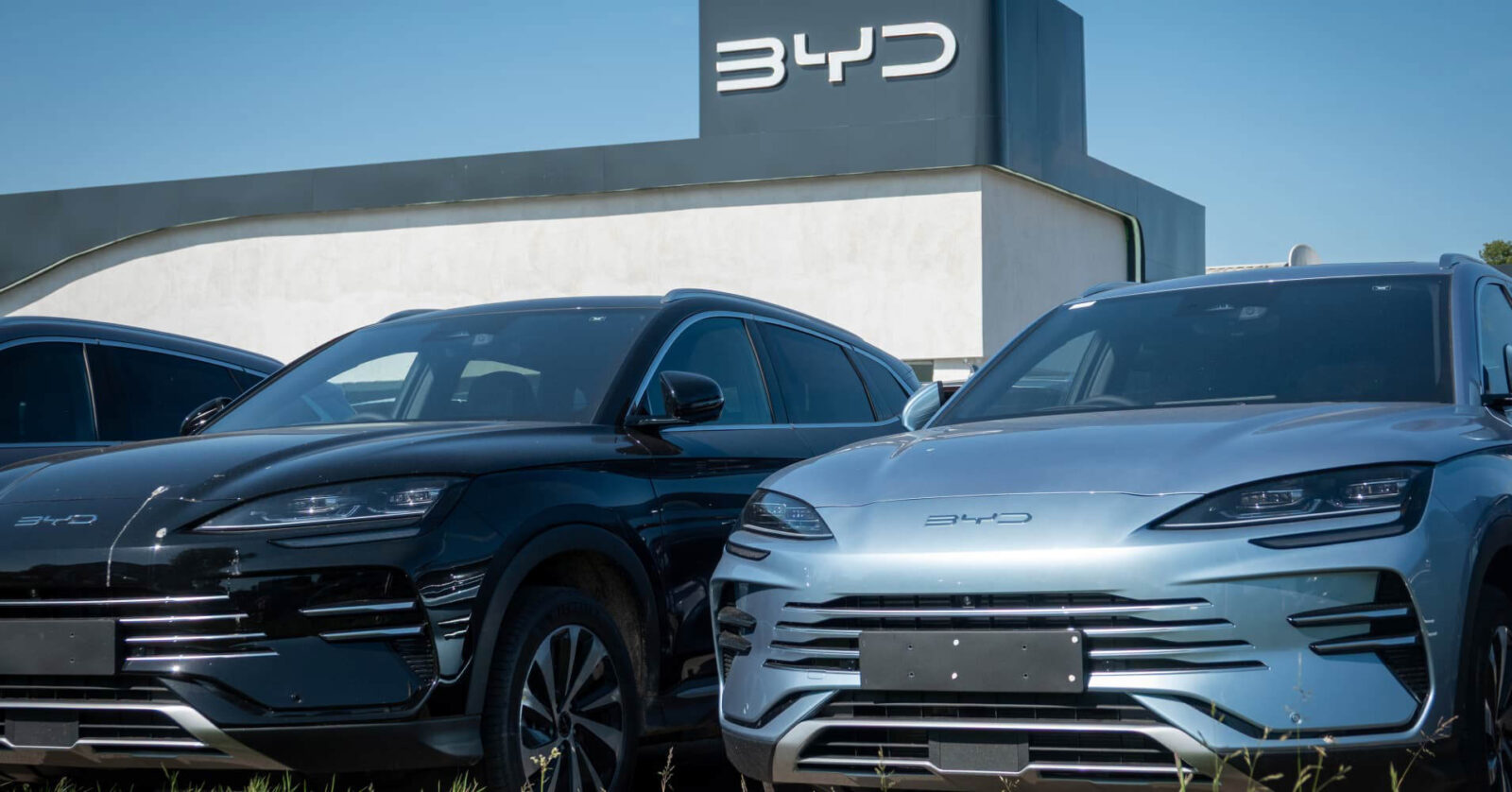
At a BYD flagship store on Shanghai’s bustling Huaihai Road, the mood in late March 2026 was unusually subdued. Sales staff fiddled with their phones between sparse customer walk-ins, while a gleaming Seal sedan sat under harsh LED lights, its price tag slashed by 15% from six months prior. Three thousand kilometers south, inside a bustling Manila dealership, the scene couldn’t have been more different. Dominique Poh, a BYD salesman, was scrambling to process a month’s worth of orders booked in just two weeks. “Clients are replacing units in favor of EVs because of the oil price hikes,” he told Bloomberg, as anxious Filipino drivers calculated the math: with Brent crude hovering above $110 per barrel, every kilometer in a combustion engine had become a small act of economic self-harm.
This bifurcated reality captures the defining paradox of the global automotive industry in early 2026. BYD, the world’s largest electric vehicle manufacturer, is simultaneously experiencing its most painful financial squeeze and its most promising demand surge. The Shenzhen-based giant reported a 19% annual profit drop to 32.6 billion yuan ($4.7 billion) for 2025 — its first decline in four years — as China’s domestic “price war” reached what chairman Wang Chuanfu termed a brutal “knockout stage.”
Yet across Asia, Europe, and Latin America, showrooms are buzzing with oil-shock refugees, and BYD’s overseas exports surged 145% to exceed one million vehicles for the first time.
The collision of these forces — overcapacity-driven margin destruction at home and geopolitical energy chaos abroad — is reshaping not just BYD’s trajectory, but the entire calculus of the global energy transition. What emerges is a story of industrial policy blowback, supply-chain Darwinism, and the unexpected ways that Middle East conflict can accelerate decarbonization faster than any climate summit.
The Price War’s Toll: How BYD Lost Its Margin Edge
The numbers tell a stark story of domestic devastation. BYD’s full-year net profit of 32.62 billion yuan missed Bloomberg consensus estimates of 35.65 billion yuan, while revenue growth of just 3.46% to 804 billion yuan represented the company’s weakest expansion in six years.
The culprit was unambiguous: gross profit margins compressed from 19.44% to 17.74%, a 170-basis-point erosion that management attributed directly to “persistent price wars and a highly competitive environment.”
This margin compression wasn’t incidental — it was structural. China’s NEV industry has descended into what domestic analysts call “involution” (内卷), a destructive cycle of overcapacity and cutthroat pricing that sees firms selling below cost to capture market share. Goldman Sachs estimated that by 2026, Chinese EV manufacturers would have capacity to produce 25 million vehicles annually — roughly equivalent to total projected global demand.
With domestic NEV penetration already exceeding 50% and subsidy phase-outs removing artificial demand support, the laws of industrial economics have reasserted themselves with a vengeance.
The competitive dynamics in BYD’s core 100,000–200,000 yuan ($14,000–$28,000) segment illustrate the squeeze. Geely’s Galaxy series, Changan’s Deepal brand, and Li Auto have all launched models targeting BYD’s Dynasty and Ocean series strongholds, often with superior intelligent driving features and aggressive pricing.
BYD’s response — making its “God’s Eye” advanced driver-assistance system standard across all price points, even entry-level hatchbacks — backfired when early software glitches triggered social media backlash, highlighting the risks of deploying premium tech at mass-market scale.
The supplier ecosystem has absorbed much of the pain. BYD and its peers have extended payment terms to suppliers and demanded price concessions, with industry accounts payable ballooning as a percentage of revenue.
Beijing’s attempt to cap this predation — issuing regulations requiring automakers to pay suppliers within 60 days — underscores how deeply the price war has eroded commercial norms.
In this environment, even technological leadership offers only temporary refuge; BYD’s Blade Battery and DM-i hybrid systems, once category-defining, now face rapid iteration from competitors who have closed the engineering gap.
The Oil Shock Accelerant: When Geopolitics Becomes Industrial Policy
If China’s domestic market represents BYD’s present challenge, the Middle East oil crisis may define its future opportunity. The February 2026 US-Israel strikes on Iran and the subsequent near-closure of the Strait of Hormuz — through which roughly 20% of global oil flows — triggered the most severe energy supply disruption since the 1973 OPEC embargo.
Brent crude surged past $126 per barrel at its peak, with Dubai crude hitting a record $166 on March 19.
The IEA’s response — a coordinated 400-million-barrel emergency stock release — provided only temporary relief. With approximately 8 million barrels per day of supply already offline and the Strait remaining effectively closed to Western-flagged vessels, analysts at Wood Mackenzie warned that sustained prices of $150–$200 per barrel were “a real possibility” if the conflict extended through mid-2026.
For EV adoption, this price spike functions as the most powerful incentive program policymakers never designed. Wood Mackenzie’s modeling suggests that at $150 Brent, electric vehicles achieve total cost of ownership parity with gasoline vehicles in the United States by 2027 — years ahead of baseline projections.
In markets with access to low-cost Chinese EVs, that crossover comes even sooner. “In those countries with access to low-cost Chinese EVs, the competitive advantage over gasoline-engined cars will come even sooner,” noted David Brown, Wood Mackenzie’s director of energy transition research.
The showroom evidence is already overwhelming. In Australia, foot traffic at BYD and GAC dealerships increased more than 30% in the two weeks following the Hormuz closure, with NEV sales rising notably.
In the Philippines, the Manila dealership’s order surge reflects a broader regional pattern: when filling a 50-liter tank costs the equivalent of an additional 40 yuan per fill-up even after Chinese regulatory price smoothing, the economics of electrification become undeniable.
VinFast, Vietnam’s emerging EV player, reportedly quadrupled showroom visits and hired additional sales staff to handle the influx.
The historical parallel is striking. The 1973 oil crisis quadrupled crude prices and sent American drivers abandoning Detroit’s V8 gas-guzzlers for fuel-sipping Japanese compacts — Honda Civics and Toyota Corollas that captured market share from 9% to 21% between 1976 and 1980.
Today’s crisis, argues the South China Morning Post, could trigger an analogous shift with Chinese EVs as the beneficiary.
The structural logic is identical: when liquid fuel becomes volatile and expensive, zero-fuel alternatives gain irresistible appeal.
Export Salvation: BYD’s Overseas Lifeline
The geographic divergence of BYD’s fortunes is stark. While domestic sales declined for five consecutive months from July through November 2025, overseas exports surged 145% year-on-year to 1.05 million units — the first time the company breached the million-mark outside China.
This export engine has transformed BYD’s risk profile: overseas sales as a share of total deliveries more than doubled from 10% in 2024 to 23% in 2025, with management targeting 1.3 million units (24% growth) for 2026.
The regional breakdown reveals a sophisticated market strategy. Latin America has emerged as BYD’s volume anchor — Mexico and Brazil alone absorbed 250,000 units in 2025, with Mexico favoring plug-in hybrids for their refueling flexibility and Brazil showing balanced demand for BEVs and PHEVs.
Europe presents a more complex picture: Belgium served as a logistics hub for 93,834 vehicles, while the UK (79,626 units) and Spain (41,317 units) demonstrated genuine market penetration.
In February 2026, BYD’s European new car registrations narrowly surpassed Tesla’s for the first time — 17,954 units versus 17,664 — a symbolic milestone in the contest for EV dominance.
The oil crisis amplifies these gains by altering consumer psychology in import-dependent regions. Asia’s major economies — China, India, Japan, South Korea, and the ASEAN states — collectively import the vast majority of their petroleum requirements. When Hormuz disruptions threaten physical supply availability, not merely price, the energy security case for electrification gains urgency. Ember, a UK-based energy think tank, estimates that scaling EVs, renewables, and heat pumps could enable fossil fuel importers to cut their import bills by 70% — a macroeconomic hedge against precisely the volatility currently roiling markets.
BYD’s strategic response has been to accelerate vertical integration abroad. Plants in Brazil, Thailand, and Hungary have come online, enabling local production that circumvents tariff barriers while reducing shipping costs.
The Rayong facility in Thailand now operates with local staff handling complete vehicle manufacturing independently; the Brazil plant covers both pure-electric and plug-in hybrid production for the broader South American market.
This “glocalization” strategy — exporting industrial chains rather than merely products — positions BYD to capture oil-crisis demand surges while insulating itself from trade policy volatility.
The Technology Edge: Flash Charging and the Range Anxiety Solution
BYD’s March 2026 technology announcements suggest management understands that showroom traffic must convert to sales through practical value propositions, not merely oil-price panic. The unveiling of second-generation Blade Battery technology and “flash charging” architecture — capable of refilling from 10% to 70% in five minutes, approaching gasoline refueling times — addresses the final friction point in EV adoption.
This technical milestone matters because oil-crisis demand surges often fade when prices normalize. The 1973 crisis accelerated Japanese auto penetration, but sustained growth required decades of quality reputation-building. BYD’s flash charging, combined with plans for 20,000 ultra-fast charging stations nationwide by end-2026, aims to lock in oil-crisis converts by eliminating the practical compromises that might otherwise drive them back to combustion engines when pump prices eventually ease.
The competitive implications extend beyond BYD. Oak Ridge National Laboratory’s demonstration of 80% charging in 10 minutes and Stanford University’s research targeting six-minute charging suggest the industry is approaching a tipping point where refueling time parity eliminates a core advantage of internal combustion.
When combined with China’s battery cost leadership — factory construction costs of $650 million versus $865 million in the US and Germany — these charging advances make Chinese EVs structurally competitive regardless of oil price volatility.
The Great EV Inflection: Peak Oil Demand Arrives Early
The convergence of BYD’s export surge and the Hormuz crisis may have broader implications for global energy markets than either phenomenon in isolation. The International Energy Agency has been progressively bringing forward its oil demand peak forecasts — from “no peak before 2050” a decade ago, to the late 2030s, then 2030, and most recently 2029 at around 106 million barrels per day.
The current crisis, argues Ember’s analysis, may have accelerated that peak to 2026 itself.
The mechanism is straightforward: oil demand destruction from the crisis combines with structural electrification incentives to create permanent behavioral change. The IEA has already cut its 2026 oil demand growth forecast to just 600,000 barrels per day, and further downward revisions are likely if Hormuz disruptions persist.
For every 10% sustained increase in oil prices, global GDP growth drops by approximately 0.13 percentage points, according to Wood Mackenzie — creating macroeconomic pressure for accelerated transition.
BYD’s position at the intersection of these trends is enviable, if precarious. The company sold 4.6 million NEVs globally in 2025, surpassing Tesla for the first time in pure battery-electric vehicle sales with 2.26 million BEVs delivered.
It has become the first Chinese automaker to enter the global top five by sales volume, overtaking Ford, General Motors, Honda, and Nissan.
Yet this scale achievement masks margin fragility: net profit margins fell 110 basis points to 4.1%, and the domestic price war shows no signs of abating.
The strategic bet is that export growth and oil-crisis demand acceleration will outpace domestic margin compression. With overseas markets now contributing 23% of sales and targeting 50% by 2030, BYD is effectively arbitraging China’s overcapacity against global energy insecurity.
The oil crisis validates this pivot, transforming what began as a defensive response to domestic saturation into an offensive capture of structural demand shift.
Risks and Realities: The Road Ahead
The bullish case for BYD’s oil-crisis windfall faces meaningful headwinds. Trade policy remains the existential variable: the European Union’s ongoing anti-subsidy investigation into Chinese EVs, the United States’ 100% tariff wall, and Canada’s recent reduction of selected Chinese model tariffs from 100% to 6% all illustrate the fragmented regulatory landscape.
BYD’s local production strategy mitigates but does not eliminate these barriers.
Power price volatility presents another complication. Qatar’s LNG supply outages and competition for Atlantic-Pacific basin cargoes have increased European power prices by at least 40% since early March.
In markets where electricity costs surge alongside oil prices, the EV value proposition becomes more nuanced. Battery storage build-out, renewable expansion, and demand-side management tools offer longer-term solutions, but near-term power price spikes could dampen conversion rates.
Quality and brand perception challenges persist. BYD’s “God’s Eye” rollout difficulties illustrate the risks of technology deployment at scale, while Western consumer skepticism toward Chinese automotive brands — however diminishing — requires sustained marketing investment. The 1973 Japanese precedent is instructive: decades of quality reputation-building followed the initial oil-crisis penetration. BYD must replicate this trust accumulation compressed into a far shorter timeframe.
Finally, the oil price trajectory itself remains uncertain. The IEA’s emergency stock releases, potential Hormuz reopening, and demand destruction at current price levels all create downside volatility. If Brent retreats sustainably below $80, the EV acceleration effect diminishes, though China’s cost-competitive manufacturing base maintains structural advantage.
Conclusion: The Knockout Stage Goes Global
BYD’s 2025 profit decline is not a story of corporate failure but of industrial policy success breeding its own contradictions. Beijing’s decade-long nurturing of the NEV sector created global leadership — and domestic overcapacity. The price war that eroded BYD’s margins to 4.1% represents the inevitable market clearing that industrial policy delayed but could not prevent.
Yet the Hormuz crisis and its oil market aftermath have introduced an unexpected variable that reframes this domestic pain as global opportunity. As David Brown of Wood Mackenzie observed, the Strait closure could be a “game-changer for EVs” — not merely accelerating adoption timelines by months or years, but fundamentally altering the competitive landscape in favor of manufacturers with cost leadership, supply-chain control, and zero-fuel products.
For the global automotive industry, the implications extend beyond BYD’s balance sheet. OPEC’s pricing power, already diminished by shale and renewables, faces a new threat: permanent demand destruction through electrification accelerated by oil volatility. The 80 million new EVs Wood Mackenzie projects for 2026–2030 represent not merely market expansion but market replacement — combustion engines retired early, oil demand curves bending downward faster than consensus forecasts.
At the Shanghai showroom on Huaihai Road, the quiet may prove temporary. If oil prices remain elevated and flash charging technology delivers on its promises, the same Chinese consumers currently bargain-hunting in a saturated market may soon find themselves part of a global wave reconsidering the economics of mobility. The knockout stage, as Wang Chuanfu termed it, was meant to describe domestic competition. It may instead characterize the global transition away from the internal combustion engine — with BYD, battered but ascendant, positioned to claim victory not despite the chaos, but because of it.


Leave a comment