


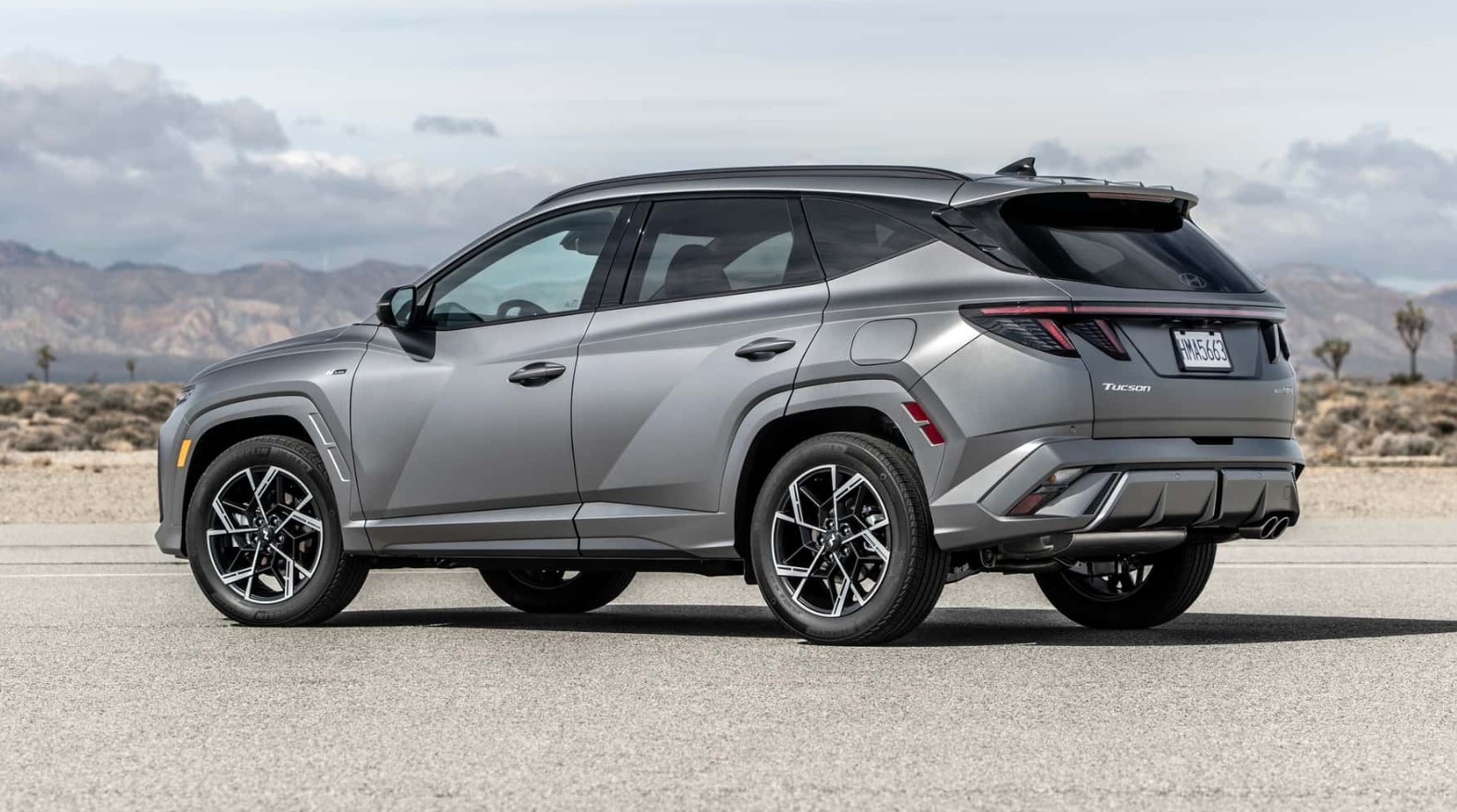
The 2027 Hyundai Tucson Hybrid gets a 242-hp TMED-II powertrain, faster 0-62 mph times, and a Q4 rollout. Full specs, rivals, and market analysis. (159 chars)
Executive Summary
Hyundai’s fully redesigned fifth-generation Tucson, unveiled through its 2026 CEO Investor Day materials, brings its hybrid powertrain to 242 horsepower and 280 lb-ft of torque via a turbocharged 1.6-liter engine paired with Hyundai’s new TMED-II dual-motor system — an 11-hp, 9-lb-ft gain over the outgoing model, cutting the 0-62 mph sprint to roughly 8.5 seconds. A non-hybrid 1.6-liter turbo variant will offer approximately 177 hp for buyers who skip electrification. The redesigned Tucson launches in initial markets in Q4 2026, with a global rollout following in 2027, positioning it for a 2028 model year arrival in North America. Hyundai is targeting roughly 41 mpg combined for the hybrid, aiming squarely at the Toyota RAV4 Hybrid and Honda CR-V Hybrid in the compact-crossover segment.
What’s Actually New Under the Hood
The headline number is 242 horsepower and 280 lb-ft (380 Nm) of torque, up from the outgoing Tucson Hybrid’s 231 hp and 258 lb-ft. That gain comes from Hyundai’s second-generation Transmission-Mounted Electric Device (TMED-II) system, which debuted on the Palisade Hybrid and pairs a turbocharged 1.6-liter four-cylinder gasoline engine with a dual-motor transmission layout. Some regional specification sheets round the output slightly differently — 180 kilowatts translates to roughly 245 hp in certain markets — but Hyundai’s own investor materials confirm the 242-hp figure as the headline U.S.-relevant spec.
The performance delta is modest but real: Hyundai estimates a 0-62 mph time of about 8.5 seconds, 0.3 seconds quicker than the outgoing hybrid. Fuel economy also improves, with Hyundai targeting roughly 17.6 km/liter (about 41 mpg) on Korea’s testing cycle, up from 38 mpg combined on the outgoing model.
The Non-Hybrid Alternative
Buyers who want to skip electrification altogether will get a non-hybrid 1.6-liter turbo variant producing roughly 177 hp and 160 lb-ft — a 27% horsepower and 43% torque deficit versus the hybrid, with a 9.5-second 0-62 mph time. Hyundai’s own materials disclose that this gas-only variant carries roughly 43% worse fuel economy than the hybrid, effectively positioning it as an entry-price option rather than a genuine performance alternative, and setting up the hybrid as the volume trim Hyundai expects most buyers to choose.
How It Stacks Up Against the Segment
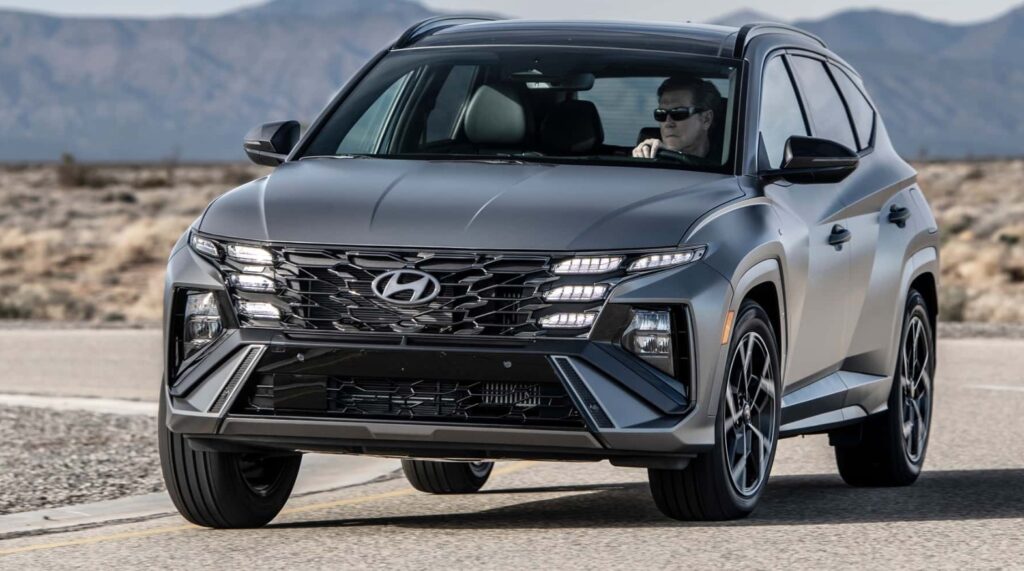
Against the current-generation Toyota RAV4 Hybrid (226 hp front-wheel-drive, up to 236 hp with all-wheel drive) and the Honda CR-V Hybrid (204 hp), the 2027 Tucson Hybrid’s 242 hp is a clear power advantage within the mainstream compact-hybrid-crossover class. On efficiency, however, Hyundai’s projected 41 mpg trails the RAV4’s 43 mpg front-wheel-drive rating, meaning Hyundai is positioning the Tucson as the power leader rather than the efficiency leader in a segment where both metrics drive cross-shopping decisions. The redesigned Tucson also arrives amid strong recent form for the outgoing model — U.S. News & World Report ranked the current Tucson number one among compact SUVs for 2026, naming it both Best Compact SUV for the Money and Best Compact SUV for Families, and it earned an IIHS Top Safety Pick+ rating under tightened 2026 criteria.
Timeline: When You’ll Actually Be Able to Buy One
Hyundai’s investor-day materials describe the new Tucson and Tucson Hybrid launching “in initial markets” in Q4 2026 — widely interpreted as Korea first, given the design reveal already circulating from that market — with global rollout following through 2027. For North American buyers, that timeline most likely translates into a 2028 model year arrival rather than a 2027 model year one, a distinction that matters for anyone cross-shopping current-generation inventory discounts against the redesign.
Financial and Market Impact Section
Hyundai’s Broader Electrification Bet
The Tucson redesign is one piece of a much larger strategic pivot Hyundai laid out at its 2026 CEO Investor Day: a target of more than 5.5 million global unit sales by 2030, with electrified models — hybrids, plug-in hybrids, and EVs combined — making up 60% of that mix, alongside a pledge to launch more than 100 new or refreshed products by 2030, including 49 in the Korean domestic market alone. Reading the Tucson’s power and efficiency upgrades in isolation understates their significance; they’re a proof point for Hyundai’s argument to investors that its hybrid technology (not just its EV lineup) can keep pace with margin-friendly demand in markets where full EV adoption is stalling on charging infrastructure and price sensitivity.
Compact SUV Segment Economics
The compact SUV/crossover class remains the single largest volume segment in the U.S. new-vehicle market, and hybrid powertrains within it now command a meaningful price premium that buyers are demonstrably willing to pay in exchange for lower fuel costs — dealer-level cost analyses show a Tucson Hybrid’s higher entry price recouped within a typical lease term purely on fuel savings versus the gas-only variant, a dynamic that supports margin expansion for Hyundai as hybrid mix rises. A stronger, more powerful hybrid halo model gives Hyundai dealers a more competitive trade-in argument against Toyota and Honda loyalists, two brands that have historically dominated hybrid-crossover resale value and consumer trust metrics.
Supply Chain and Input-Cost Considerations
Because TMED-II is shared with the Palisade Hybrid, Hyundai is spreading the tooling and battery-supply investment for the new dual-motor architecture across multiple volume nameplates rather than isolating it to a single model — a scale efficiency that should help offset the input-cost pressure automakers globally have faced from battery-grade lithium, nickel, and semiconductor pricing volatility over the past two years. Investors and suppliers tracking Hyundai Mobis and LG Energy Solution, Hyundai’s primary battery and component partners, should watch for capacity commitments tied specifically to TMED-II production as a leading indicator of how aggressively Hyundai intends to scale hybrid output ahead of the 2028 North American Tucson launch.
Key Takeaways
- The 2027 Hyundai Tucson Hybrid gets 242 hp and 280 lb-ft of torque via a new TMED-II dual-motor hybrid system, an 11-hp gain over the outgoing model.
- 0-62 mph drops to approximately 8.5 seconds, a 0.3-second improvement; combined fuel economy is targeted near 41 mpg.
- A non-hybrid 1.6-liter turbo variant offers roughly 177 hp and 160 lb-ft for buyers avoiding electrification, at a 43% fuel-economy penalty.
- Launch begins “in initial markets” in Q4 2026, most likely Korea first, with global rollout through 2027 — pointing to a 2028 model year debut in North America.
- The redesign supports Hyundai’s 2030 target of 5.5 million global unit sales with 60% electrified mix and 100-plus new or refreshed products.
- Against rivals, the Tucson Hybrid leads on horsepower (242 hp vs. RAV4’s 226-236 hp and CR-V’s 204 hp) but trails Toyota’s RAV4 on peak fuel economy.




Leave a comment