


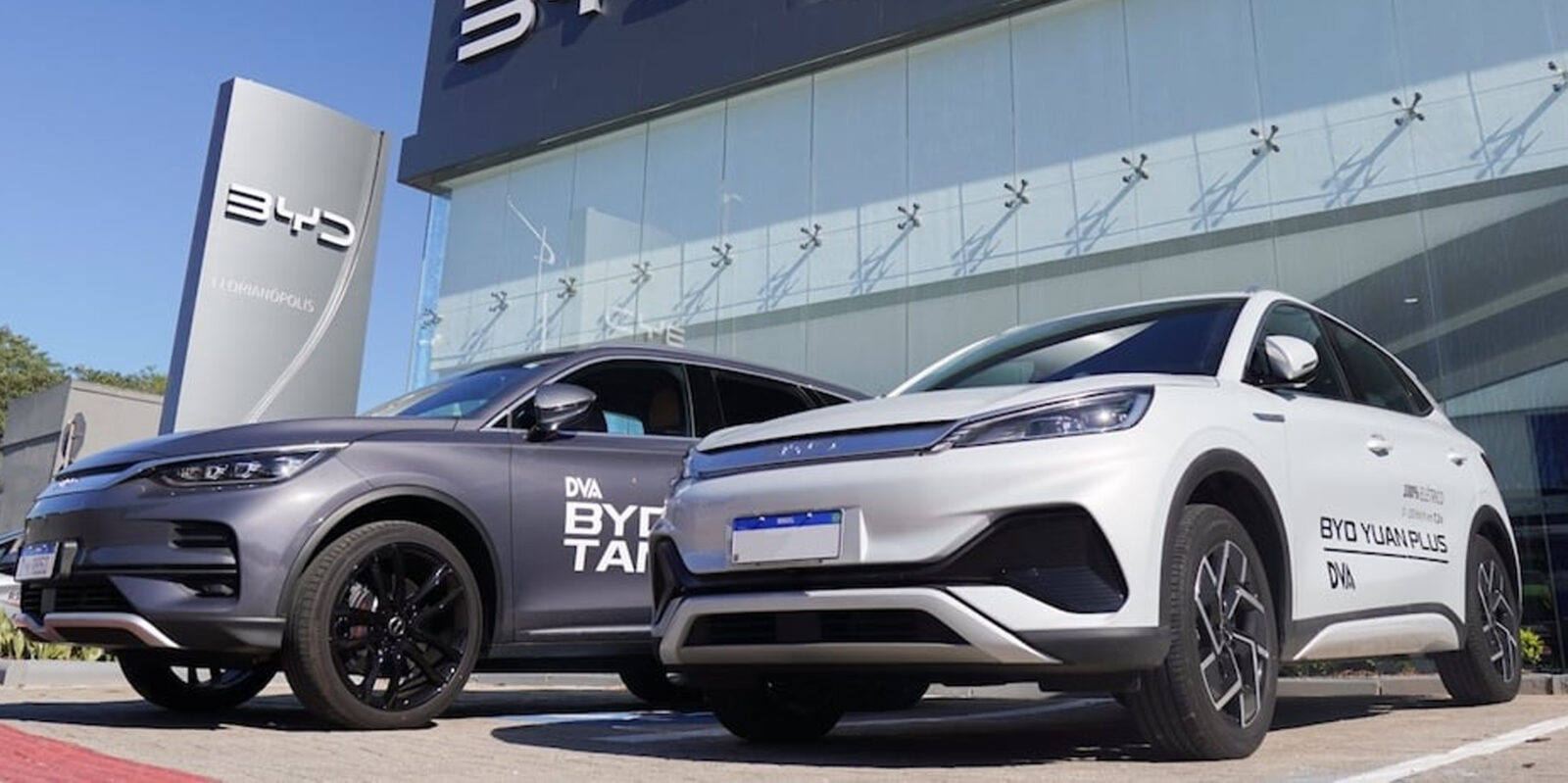
Discover the top 10 reasons BYD has an edge over other EVs in Pakistan, from Blade Battery technology and competitive pricing to charging infrastructure, warranty, safety, range and a growing dealership network.
Pakistan’s electric-vehicle market is moving from an experimental phase toward a more competitive mainstream market, and BYD is increasingly positioned at the center of that transition. In 2026, the company has built a broader local portfolio covering compact SUVs, a larger family SUV, a performance sedan and a plug-in hybrid pickup, while its Pakistani partner has expanded the authorized retail network to seven locations. That combination gives BYD something many EV newcomers struggle to build at the same time: product variety, technology credibility and an increasingly visible after-sales presence.
BYD’s advantage, however, is not simply that its cars are electric. Its stronger proposition comes from the way it combines battery technology, driving range, equipment, charging options, warranty coverage, safety-oriented engineering and multiple vehicle categories. Current listed prices show the BYD Atto 2 at PKR 7.29 million, Atto 3 at PKR 8.99 million, Seal at PKR 14.79 million for the Dynamic and PKR 16.99 million for the Premium, Sealion 7 at PKR 15.49 million and Shark 6 at PKR 19.95 million. These are ex-factory figures and can change with taxes, duties, exchange rates and company pricing decisions.
Why BYD Could Be One of Pakistan’s Strongest EV Brands in 2026
Calling BYD the definitive “best EV brand” would be too broad because different buyers have different requirements. A city commuter, a long-distance traveler, a family SUV buyer and a pickup enthusiast are not looking for the same vehicle.
But when the competition is assessed across technology, range, safety, features, charging and market support, BYD has built a particularly strong position.
Here are the top 10 reasons.
1. BYD Has Its Own Battery Advantage
The biggest technical reason behind BYD’s reputation is its Blade Battery technology.
Battery quality is arguably the most important consideration when buying an EV because the battery affects range, charging, durability, performance and long-term ownership costs.
BYD says its Blade Battery has undergone demanding safety testing, including a nail-penetration test and an extreme strength test involving a 46-tonne truck. The company’s Pakistan product pages also highlight long-life characteristics and fast charging capability.
For Pakistani consumers, battery confidence matters even more because EV buyers are still getting used to questions surrounding:
- Battery degradation
- Extreme summer temperatures
- Charging reliability
- Replacement costs
- Long-term resale value
- Warranty coverage
The technology therefore gives BYD a strong marketing and engineering story that goes beyond simple horsepower figures.
Why it matters in Pakistan
An EV buyer is not only purchasing a vehicle. They are also investing in a high-value battery system. A manufacturer with significant control over battery technology can potentially manage integration between battery, motor, software and thermal systems more effectively.
That is one reason BYD’s battery-centric strategy is important to its competitiveness.
2. BYD Offers a Wider Choice of Vehicles
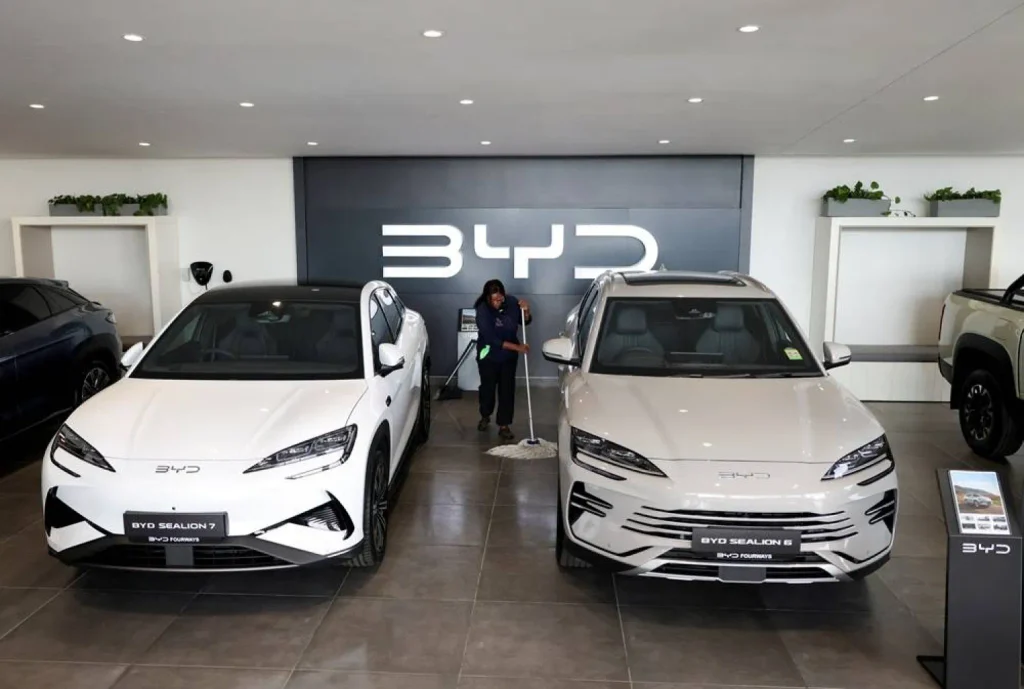
Many EV brands enter a market with one model and wait to see how consumers respond. BYD has taken a different approach.
As of 2026, BYD Pakistan’s official lineup includes:
| BYD Model | Type | Listed Ex-Factory Price* | Official Claimed Range |
|---|---|---|---|
| Atto 2 | Electric SUV | PKR 7.29 million | Up to 380 km |
| Atto 3 | Electric SUV | PKR 8.99 million | Up to 410 km |
| Seal Dynamic | Electric sedan | PKR 14.79 million | Up to 650 km |
| Seal Premium | Electric sedan | PKR 16.99 million | Up to 650 km |
| Sealion 7 | Electric SUV | PKR 15.49 million | Up to 567 km |
| Shark 6 | Plug-in hybrid pickup | PKR 19.95 million | Depends on operating mode |
*Prices are current listed ex-factory figures and can change. Range figures are manufacturer claims measured under stated test conditions and should not be interpreted as guaranteed real-world range.
This breadth gives BYD an important advantage.
A buyer with a seven-million-rupee-plus budget can look at the Atto 2. A customer wanting more space and performance can move toward the Atto 3 or Sealion 7. A buyer focused on performance can consider the Seal, while someone who wants a pickup with electrified power can consider the Shark 6.
That creates an ecosystem rather than a single-product business.
3. Strong Driving Range Reduces EV Range Anxiety
Range anxiety remains one of the biggest psychological barriers to EV adoption in Pakistan.
The concern is understandable. Petrol stations are widespread, while charging stations are still developing. Drivers therefore want as much usable range as possible before considering longer journeys.
BYD has targeted that concern with competitive claimed ranges.
The Atto 2 is listed with a range of up to 380 km, while the Atto 3 is rated up to 410 km. The Seal is marketed with up to 650 km, and the Sealion 7 with up to 567 km.
The critical point, however, is that laboratory or standardized test figures are not the same as real-world driving results.
Actual range can vary because of:
- Traffic and average speed
- Air-conditioning use
- Road quality
- Driving style
- Passenger and luggage load
- Temperature
- Tire pressure
- Terrain
- Charging and battery conditions
BYD itself notes that performance and range may vary depending on conditions including electricity load, charger specifications, driving habits, roads and climate.
Still, strong official range numbers give BYD buyers more flexibility and help make EV ownership less intimidating.
4. Charging Infrastructure Is Becoming a Competitive Advantage
Having a good EV is only half the equation. The other half is being able to charge it conveniently.
This is an area where BYD’s Pakistan operation has started building a more complete ownership proposition.
BYD Pakistan says its vehicles come with a standard 2.2 kW home charger, with an optional 7 kW charger capable of reducing charging time. The company also says public DC fast chargers are already operational in Karachi, Lahore and Islamabad, with charging capacities ranging from 30 kW to 120 kW.
BYD also says its partnership with Hubco Green includes plans to expand charging infrastructure and develop charging stations roughly every 200 to 250 kilometers along the Karachi-to-Peshawar route.
This is strategically important.
An EV with impressive specifications can still be difficult to own if the charging network is weak. As Pakistan’s charging infrastructure expands, brands capable of integrating vehicle sales with home charging and public charging support could have an advantage over companies selling cars without an ecosystem around them.
5. BYD Is Building a Real After-Sales Footprint
One of the biggest concerns surrounding relatively new automobile brands in Pakistan is after-sales support.
Consumers want to know:
Where will I service the car?
Can I get parts?
Who will handle warranty claims?
What happens if the vehicle develops a technical fault?
BYD is steadily reducing that uncertainty.
In June 2026, BYD Pakistan opened a third authorized dealership in Karachi’s Korangi area, taking its nationwide network to seven locations. The company said the network would continue expanding across major cities during the second half of 2026.
The expansion is significant because dealership density can influence:
- Service accessibility
- Customer confidence
- Test-drive availability
- Parts logistics
- Resale perception
- Brand visibility
The delivery side also shows signs of growing operational capacity. In March 2026, Mega Motor Company reported delivering 100 Atto 2 vehicles nationwide in a single day across multiple cities.
For a developing EV market, that kind of visible customer footprint matters.
6. Warranty Coverage Makes the EV Investment Less Intimidating
A major issue for prospective EV buyers is the perceived risk of owning expensive battery technology.
BYD’s Pakistan documentation provides meaningful warranty coverage. The Atto 3 brochure, for example, lists an 8-year/160,000-km Blade Battery warranty and a 6-year/150,000-km vehicle warranty, with the applicable limit determined by the stated time or mileage conditions.
That does not eliminate all ownership risk, but it changes the consumer calculation.
For a vehicle costing several million rupees, buyers are naturally interested in:
- Battery warranty
- Motor and electronics coverage
- Service intervals
- Accident repair
- Genuine spare parts
- Depreciation
- Insurance protection
For potential buyers comparing EV financing in Pakistan, warranty coverage can also make the long-term financial proposition easier to evaluate because a portion of the most expensive component is covered for a defined period.
7. BYD Packs Premium Technology Into Its Cars
BYD’s competitive advantage is not limited to batteries.
The Atto 2, for example, includes features such as NFC keyless access, wireless charging, Vehicle-to-Load functionality and driver-assistance technology.
The Atto 3 offers a 15.6-inch rotating infotainment display with wireless Apple CarPlay and Android Auto, a panoramic sunroof, premium interior materials and up to 1,340 liters of boot space with the rear seats folded.
The Seal adds features such as a head-up display and advanced driver-assistance systems, while the Sealion 7 offers features including Nappa leather seats, a panoramic sunroof, intelligent tailgate and a 12-speaker Dynaudio audio system.
This creates a strong value proposition for buyers who expect their car to function as a technology product rather than simply a means of transportation.
8. BYD Is Selling More Than Pure EVs
Another strategic strength is that BYD is not dependent exclusively on battery-electric cars.
The Shark 6 is a plug-in hybrid electric vehicle, giving customers an alternative to a fully battery-electric powertrain.
That matters in Pakistan because charging infrastructure is improving but remains less mature than the traditional petrol network.
A plug-in hybrid can appeal to consumers who want electrified driving while also retaining an internal-combustion engine as part of the powertrain.
BYD launched the Shark 6 in Pakistan in 2025, positioning it as a new category in the local automobile market. Its listed current price is around PKR 19.95 million.
This broader energy strategy could become an important competitive advantage as Pakistan’s transportation market gradually moves toward electrification.
9. BYD Fits Pakistan’s Emerging EV Policy Environment
BYD is entering the Pakistani market at a time when government policy is increasingly focused on electric mobility.
Pakistan’s National Electric Vehicle/NEV Policy 2025–30 targets electric vehicles accounting for 30% of new vehicle sales by 2030. Government materials also identify reductions in oil imports, emissions and air pollution as major policy objectives.
The policy framework also recognizes that successful EV adoption requires investment in charging infrastructure, manufacturing capability, supply chains and consumer adoption.
That creates a potentially favorable long-term environment for established EV manufacturers.
Of course, government policy does not guarantee that any particular brand will win. Taxes, import rules, incentives, local assembly and future automotive policies can change.
Nevertheless, BYD’s existing technology portfolio and local footprint mean the company is entering this transition with infrastructure already being developed.
10. BYD Has a Strong Combination of Price, Technology and Brand Perception
Ultimately, the strongest argument for BYD is not one isolated feature.
It is the combination.
Consider what a Pakistani EV buyer is actually evaluating.
They may want:
- A competitive purchase price
- Long driving range
- Safe battery technology
- Modern interior features
- Good acceleration
- Home charging
- Public charging access
- Warranty protection
- Authorized service
- Insurance options
- Reasonable long-term ownership costs
- A brand that is likely to remain in the market
BYD checks many of those boxes simultaneously.
That is particularly important in a market where EV customers are still deciding which brands they can trust for the next five to ten years.
BYD vs Other EVs in Pakistan: What Buyers Should Really Compare
The right question is not simply “Is BYD better?”
The better question is:
Which EV offers the strongest total ownership proposition for your specific needs?
For example, a consumer comparing EVs should evaluate the following:
Technology
Look at battery chemistry, battery capacity, thermal management, motor output, charging speed and software.
Total Cost of Ownership
Don’t stop at the sticker price. Include electricity costs, routine maintenance, tires, insurance, financing charges, depreciation and possible charging equipment installation.
Real-World Range
A quoted 500 km range means little if your daily journey involves extreme temperatures, high speeds and frequent use of air conditioning.
Service Network
A cheaper EV may become expensive if parts are difficult to source or specialized repairs require transportation to another city.
Resale Value
The Pakistani EV market is young, so resale data is still evolving. Brand recognition and the availability of authorized service can nevertheless influence buyer confidence.
Is BYD the Best EV in Pakistan in 2026?
There is no universal answer.
For a buyer seeking an affordable entry into BYD’s electric SUV lineup, the Atto 2 is an important option. The Atto 3 offers a more substantial package with a claimed 410 km range and a broader feature set. The Seal targets buyers who prioritize sedan performance and range, while the Sealion 7 combines SUV practicality with premium features.
The company’s wider portfolio gives it an advantage that smaller EV brands may not yet possess.
More importantly, BYD is building the supporting ecosystem around those vehicles, including dealerships, home charging, public charging partnerships and after-sales infrastructure.
What About EV Insurance and Financing in Pakistan?
This is an increasingly important commercial consideration for EV buyers.
A PKR 7 million to PKR 20 million vehicle represents a substantial financial commitment, so buyers should compare car financing, bank auto-loan rates, down-payment requirements and total financing costs rather than focusing only on monthly installments.
Insurance should be evaluated just as carefully. Comprehensive EV insurance can be particularly relevant because battery packs and electronic systems are expensive components. Buyers should compare premiums, deductibles, depreciation treatment, theft protection, accident coverage and battery-related exclusions.
BYD’s local ecosystem is also moving toward structured vehicle protection. Mega Motor Company’s MMC Care material describes protection options covering risks such as theft, accidental damage and total loss, with coverage and rates subject to the applicable insurance arrangements.
The important lesson is simple: the cheapest monthly payment is not necessarily the cheapest overall ownership cost.
For consumers comparing an EV purchase with a conventional petrol car, a total-cost-of-ownership calculation can provide a much clearer picture.
The Biggest Risks for BYD in Pakistan
BYD’s position is strong, but it is not guaranteed.
There are several challenges the company and Pakistan’s wider EV industry still need to overcome.
Charging Infrastructure
Pakistan’s fast-charging network is growing, but it is still developing. Long-distance EV travel requires reliable coverage beyond major urban centers.
Electricity and Home Charging
Not every household has ideal electrical infrastructure for EV charging. Apartment residents may face additional difficulties.
Resale Uncertainty
The used EV market remains relatively young, which makes future residual values harder to predict.
Import and Policy Changes
Changes in duties, taxes, exchange rates and automotive policy can affect final prices. BYD’s own booking terms acknowledge that pricing can change because of government taxes, levies, currency fluctuations and other factors.
Consumer Education
Many Pakistani drivers are still unfamiliar with battery degradation, charging curves, regenerative braking and EV maintenance.
These are not necessarily weaknesses unique to BYD. They are structural challenges for the broader EV market.
Final Verdict: Why BYD Has an Edge
BYD’s advantage in Pakistan in 2026 comes from depth rather than one killer feature.
The company combines its proprietary Blade Battery technology with competitive range, advanced features, multiple vehicle categories, a growing dealership network, charging infrastructure partnerships and substantial warranty coverage.
Its current Pakistani lineup spans the Atto 2, Atto 3, Seal, Sealion 7 and Shark 6, giving the brand a presence across several emerging electrified vehicle segments.
Pakistan’s EV transition is also gaining institutional support. The government’s NEV Policy 2025–30 targets 30% of new vehicle sales as electric by 2030, creating a long-term growth opportunity for manufacturers capable of combining technology with local market support.
That does not mean every BYD model is automatically better than every rival. Buyers should still compare purchase price, real-world range, charging speed, service availability, warranty terms, insurance quotes, financing costs and expected resale value before making a decision.
But for a market searching for an EV brand that can offer both technology and an ownership ecosystem, BYD currently has one of the strongest propositions in Pakistan.
Frequently Asked Questions
Is BYD a good EV brand in Pakistan?
BYD has established a growing presence in Pakistan with multiple EV models, an expanding dealership network, charging partnerships, Blade Battery technology and structured warranty support.
Which BYD car is cheapest in Pakistan in 2026?
Based on the currently listed prices, the BYD Atto 2 is the lowest-priced model in BYD Pakistan’s lineup at around PKR 7.29 million ex-factory.
What is the range of BYD Atto 3 in Pakistan?
BYD Pakistan lists the Atto 3 with a claimed range of up to 410 km. Actual driving range can vary with temperature, driving style, road conditions and use of climate control.
How long does a BYD battery warranty last?
The Atto 3 Pakistan brochure specifies an 8-year or 160,000-km Blade Battery warranty, subject to the stated warranty terms.
Does BYD support EV charging in Pakistan?
Yes. BYD Pakistan provides home charging options and says public DC fast-charging stations are operating in Karachi, Lahore and Islamabad through its charging partnership network.
Is BYD better than other electric cars in Pakistan?
BYD has several competitive advantages, but there is no single best EV for every buyer. The best choice depends on budget, range requirements, charging access, vehicle size, financing, insurance and expected ownership period.
The Bottom Line
BYD has arrived in Pakistan at a strategically important moment. The market is becoming more comfortable with electric mobility, charging infrastructure is expanding and government policy is encouraging the transition away from conventional fossil-fuel vehicles.
Its strongest edge is that it is not selling an EV as an isolated product. It is building a broader ecosystem around the vehicle.
Would you choose a BYD over a petrol car or another EV in Pakistan in 2026, and which model would you buy: Atto 2, Atto 3, Seal, Sealion 7 or Shark 6? Share your choice and the reason behind it in the comments.


Leave a comment