


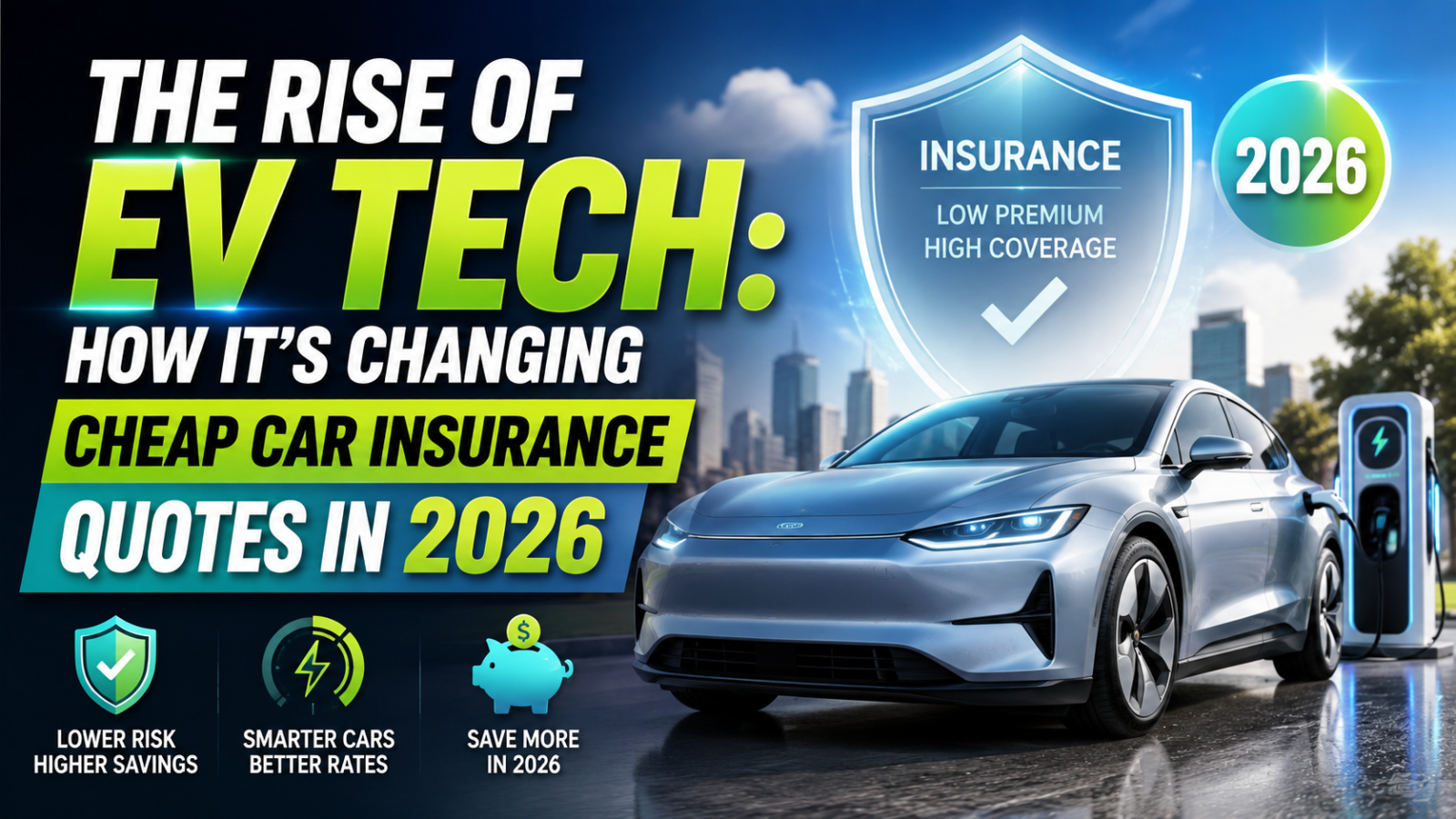
Electric vehicles have moved firmly into the mainstream in 2026, but the insurance side of EV ownership still catches many new buyers off guard — advanced driver-assistance systems, expensive battery packs, and specialized repair requirements have created a genuinely different risk and pricing model than traditional gas-powered vehicles. If you’re shopping for cheap car insurance quotes on an EV, understanding how these technology factors actually influence your premium is the difference between guessing and shopping strategically.
This guide breaks down exactly how EV technology is reshaping auto insurance pricing, why EVs often carry different premiums than comparable gas vehicles, and specific strategies EV owners can use to find genuinely competitive insurance quotes without sacrificing coverage. Whether you already own an EV or you’re weighing the total cost of ownership before your next purchase, insurance is a piece of the math worth getting right.
Why EV Insurance Pricing Looks Different
The core driver behind EV insurance pricing differences comes down to repair costs. Battery packs remain the single most expensive component to replace on an EV, and even moderate collision damage can sometimes trigger a full battery pack assessment, pushing repair costs — and therefore claims payouts — meaningfully higher than comparable damage on a traditional vehicle. Specialized EV repair technicians and certified parts are also less widely available than traditional auto body shops, which can extend repair timelines and increase labor costs in many markets.
At the same time, advanced driver-assistance systems (ADAS) — automatic emergency braking, lane-keeping assistance, adaptive cruise control — have been shown to reduce accident frequency in many studies, which insurers increasingly factor into pricing models as a mitigating factor against the higher repair cost profile.
How Advanced EV Tech Affects Your Premium
Insurers are increasingly pricing EV policies based on a more nuanced combination of factors than they use for traditional vehicles, reflecting both the elevated repair cost risk and the safety technology mitigating factors built into modern EVs.
Factors Specifically Affecting EV Insurance Pricing
- Battery replacement cost exposure – A major driver of comprehensive and collision premium differences versus gas vehicles
- ADAS and safety technology credits – Many insurers offer discounts for vehicles equipped with proven accident-reduction technology
- Specialized repair network availability – Premiums can vary by region based on local EV-certified repair shop availability
- Telematics and usage-based pricing – EVs’ built-in connectivity makes usage-based insurance programs easier to implement and often more accurately priced
- Charging-related risk factors – Home charging setup and associated electrical system considerations increasingly factored into some underwriting models
EV vs. Gas Vehicle Insurance: A Comparison
| Factor | Electric Vehicle | Comparable Gas Vehicle |
|---|---|---|
| Average comprehensive/collision cost | Often higher | Often lower |
| Repair cost per claim | Higher (battery/specialized parts) | Lower (established repair infrastructure) |
| ADAS safety discount eligibility | Frequently available | Available but less standard |
| Usage-based insurance fit | Strong (built-in telematics) | Moderate (requires separate device/app) |
| Repair timeline | Often longer | Typically shorter |
| Total cost of ownership insurance impact | Higher premium, potentially offset by safety discounts | Lower premium baseline |
How to Find Genuinely Cheap Car Insurance Quotes for Your EV
- Shop multiple insurers specifically for EV experience – Not all carriers price EVs the same way; some have more mature EV-specific underwriting models than others
- Ask directly about ADAS and safety technology discounts – These aren’t always applied automatically and sometimes require explicit documentation of your vehicle’s safety features
- Consider usage-based or telematics insurance programs – EVs’ built-in connectivity often makes these programs easier to enroll in and can meaningfully lower premiums for lower-mileage or safer drivers
- Check regional repair network coverage before buying – If you’re choosing between EV models, insurance cost can be a meaningful differentiator based on parts and repair availability in your area
- Bundle with home insurance if you have home EV charging – Bundling discounts remain one of the most reliable ways to lower overall premium costs
- Review your coverage limits relative to actual replacement cost – Make sure comprehensive coverage limits reflect your EV’s real replacement value, including battery pack cost
What to Expect as EV Insurance Markets Mature
As EV adoption continues to grow and repair infrastructure matures — more certified technicians, wider parts availability, and more historical claims data for insurers to price against — the current premium gap between EVs and comparable gas vehicles is generally expected to narrow over time. Insurers are also becoming more sophisticated at pricing individual EV models based on actual claims experience rather than broad category assumptions, which means shopping around model-by-model, rather than assuming all EVs are priced similarly, increasingly pays off.
Questions to Ask Before You Buy an EV
If insurance cost is a meaningful part of your total cost of ownership calculation, it’s worth getting an actual insurance quote before finalizing your EV purchase decision rather than after. Request quotes for the specific trim and model year you’re considering, since even small variations in trim level can affect the vehicle’s safety technology package and therefore its available discounts. Ask your prospective insurer directly whether they have established underwriting experience with your specific EV manufacturer, since some carriers have priced far more EV policies than others and tend to offer more competitive, accurately calibrated rates as a result. It’s also worth asking whether your insurer’s telematics or usage-based program specifically supports your EV’s built-in connectivity, since not all usage-based insurance programs integrate smoothly with every manufacturer’s data-sharing protocols, and a mismatch here can mean missing out on a discount you’d otherwise qualify for.
Frequently Asked Questions
Are all EV models priced similarly for insurance, or does it vary significantly by model?
It varies significantly. Repair cost data, parts availability, and claims history differ meaningfully between EV manufacturers and models, which means shopping and comparing quotes for the specific model you’re considering is far more useful than assuming a general “EVs cost more” rule applies equally across the board.
Does home EV charging equipment need to be insured separately?
In many cases, home charging equipment is covered under a homeowners insurance policy rather than an auto policy, though coverage specifics vary by insurer. It’s worth confirming with your homeowners insurance provider that your charging setup is adequately covered, particularly if it involved significant electrical system upgrades.
Do hybrid vehicles face the same insurance pricing dynamics as fully electric vehicles?
Hybrids generally see a smaller version of the same effect, since they carry some elevated repair cost exposure from battery and hybrid drivetrain components but typically less than full EVs, whose battery packs are larger and more central to the vehicle’s overall value and repair cost profile.
Will EV insurance costs eventually match gas vehicle costs as the technology matures?
Most industry analysts expect the gap to narrow over time as repair infrastructure expands, more claims data becomes available for accurate pricing, and battery replacement costs potentially decline with manufacturing scale, though a precise timeline for full parity remains uncertain.
Final Thoughts
EV technology has fundamentally reshaped how auto insurers assess risk and price policies, balancing higher repair cost exposure against genuinely effective safety technology that reduces accident frequency. For EV owners shopping for cheap car insurance quotes, the smartest strategy is comparing multiple insurers with real EV underwriting experience, actively pursuing every applicable safety and telematics discount, and reassessing coverage limits to reflect your vehicle’s true replacement cost.
Have you noticed your EV’s insurance premium differ significantly from what a comparable gas vehicle would cost? What’s worked to bring your quote down? Share your experience in the comments.


Leave a comment