


The myth of the “city-only” electric vehicle is rapidly dissolving on Pakistani roads. As of June 2026, the local automotive narrative has pivoted from speculative interest to high-stakes market adoption. For the long-distance commuter or the luxury-minded professional, the constraints of range—long the primary barrier to entry—are being systematically dismantled by a new generation of battery-electric vehicles (BEVs) and range-extended electric vehicles (REEVs).
Data from the automotive sector underscores this shift. Registrations for electric vehicles have surged, transitioning from a few hundred units in 2021 to over 80,000 by mid-2025, according to government official statistics. This transition is no longer just about environmental stewardship; it is an economic response to volatile fuel import bills that currently cost the country billions in foreign exchange. For the buyer, the focus has shifted to one vital metric: how far can you go on a single charge?
The Architecture of Endurance: Top Five Long-Range Contenders
The market currently favors vehicles that balance high-density lithium-ion or LFP battery technology with efficient aerodynamics. While pure BEVs offer the cleanest energy profile, the rise of REEVs—which utilize a small petrol generator to sustain the battery without direct mechanical propulsion—has emerged as a vital bridge for Pakistan’s geography.
The following list identifies the top five vehicles currently redefining the high-range segment in the local market:
- Forthing Friday (REEV): A standout for range-anxious buyers, this SUV delivers a total combined range of 1,150km. By separating the petrol engine from the drivetrain, it retains the silent, instant-torque characteristics of an EV while offering the peace of mind required for long-haul travel between cities like Lahore and Karachi.
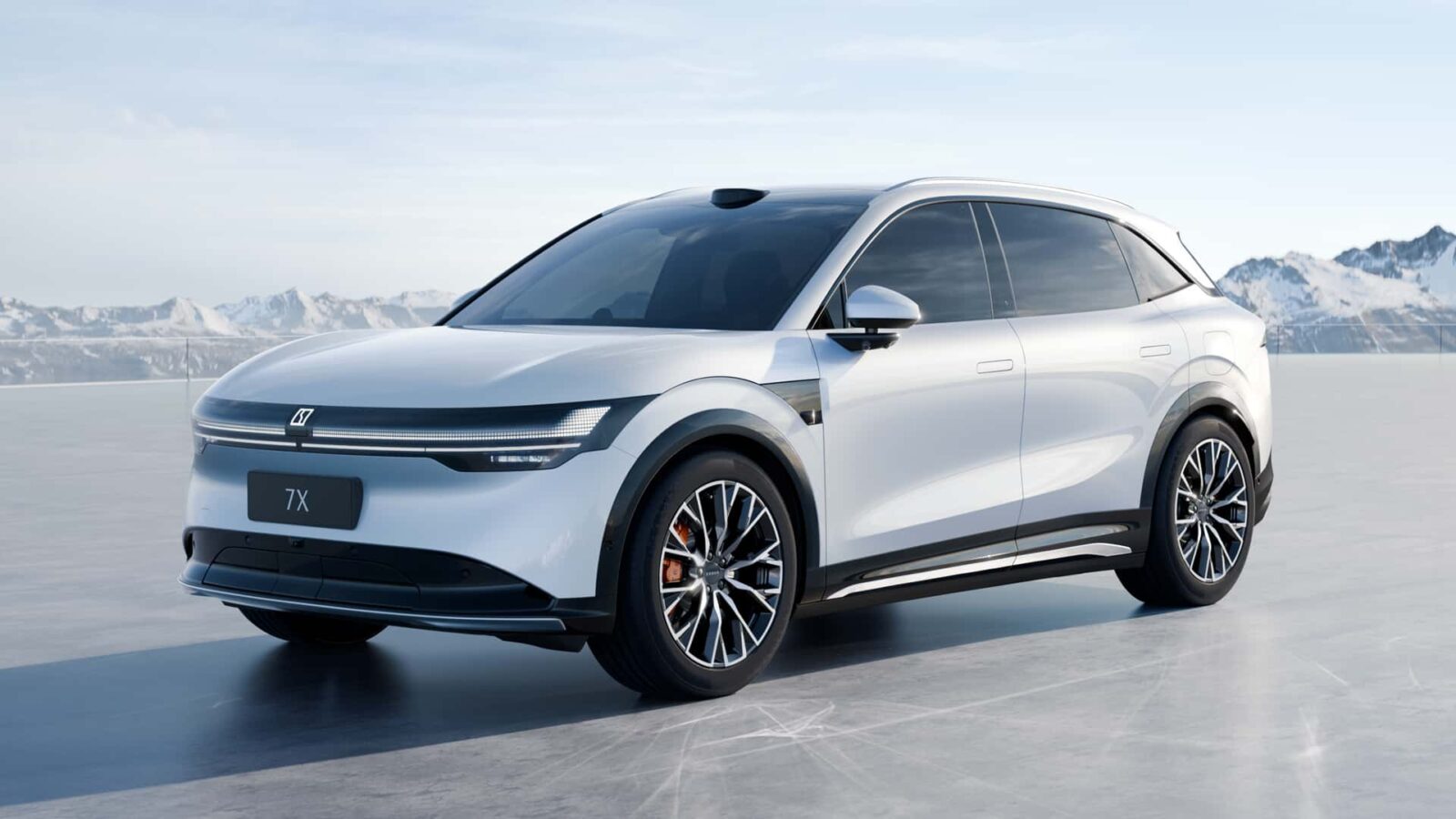
- Zeekr 7X: Representing the pinnacle of premium performance, this SUV offers a 543km WLTP range. With a 637-horsepower output and 16-minute fast-charging capabilities, it competes directly with imported petrol luxury vehicles while providing a vastly superior digital cockpit experience.
- JMEV Elight: A sedan designed for the urban professional, the Elight achieves 500km on a single charge. Its 0.26Cd drag coefficient is a masterclass in efficiency, proving that range is as much a function of engineering as it is of battery size.
- Deepal S05 (REEV): This SUV pushes the 1,000km combined range barrier. Beyond its range, it integrates advanced tech, such as an augmented reality HUD and a Snapdragon 8155 chip-powered cockpit, highlighting that high-range vehicles in 2026 are increasingly defined by their software as much as their power units.
- Riddara RD6: As Pakistan’s first electric pickup, the RD6 offers 461km of range. Its value lies in utility; with vehicle-to-load (V2L) technology, it functions as a 6kW generator, making it a functional, long-range powerhouse for agricultural and adventure use cases.
Analytical Layer: Beyond the Battery
What defines the “best” range in a market as structurally unique as Pakistan’s? While pure-electric range is the headline, the reality of the New Energy Vehicle (NEV) Policy 2025–2030 suggests a nuanced future.
Why are range-extended vehicles becoming more popular in Pakistan?
Range-extended vehicles (REEVs) are gaining traction because they address “range anxiety” in regions lacking a dense, high-speed DC fast-charging network. By utilizing a petrol generator to sustain the battery, they provide the silent, instant-torque performance of an EV for city driving while maintaining the flexibility of a traditional car for intercity travel, effectively bridging the gap during the national transition to full electrification.
The debate over these technologies is significant. Critics point out that prioritizing REEVs or plug-in hybrids might delay the development of a pure-electric infrastructure, potentially creating a “transitional trap.” Yet, from a consumer perspective, the market is voting with its wallet, favoring technologies that eliminate the friction of long-distance ownership today rather than waiting for tomorrow’s infrastructure.
Implications for a Shifting Market
The downstream effects of this range expansion are profound. We are witnessing the birth of a new “green” supply chain. As local assembly of EV components gains momentum, the reliance on high-cost imported fuels is expected to decrease, theoretically stabilizing the broader energy sector. However, the Federal Budget 2026–27 looms as a potential inflection point. Industry analysts suggest that tax concessions for EVs are currently under review, which could narrow the price gap between electric and internal combustion engine (ICE) vehicles.
For the private citizen, the calculus is changing. If the goal of the NEV policy—to see EVs constitute 30% of new vehicle sales by 2030—is to be met, the government must balance fiscal revenue needs with the imperative of decarbonization. A sudden reversal of tax incentives could stifle the very momentum that has seen electric two-wheeler sales climb 191% in early 2026.
The Dissenting View: A Policy Contradiction
The aggressive push for electrification is not without its detractors. A recurring point of contention is the classification of plug-in hybrids within the same preferential tax brackets as pure battery-electric vehicles. Critics argue this creates a regulatory distortion, discouraging manufacturers from investing in pure-EV localization in favor of cheaper hybrid assemblies that still rely on petrol.
Engineering Development Board experts have noted that if these transitional vehicles become cheaper than petrol-driven counterparts, they may displace the domestic auto parts industry before local EV manufacturers are fully scaled to compete. This signals a tension that policymakers must resolve: should the state prioritize the immediate reduction of carbon emissions, or the long-term goal of building a self-sustaining, zero-emission automotive ecosystem?
The current landscape is a testament to progress, but it remains in a state of delicate flux. As of June 2026, the transition is visible on the motorways—quiet, quick, and increasingly capable of going the distance. Whether the regulatory framework can keep pace with this technical evolution remains the defining question of the next five years. The path toward a cleaner, electrified Pakistan is clear, but the terrain remains rugged.


Leave a comment