


Overview
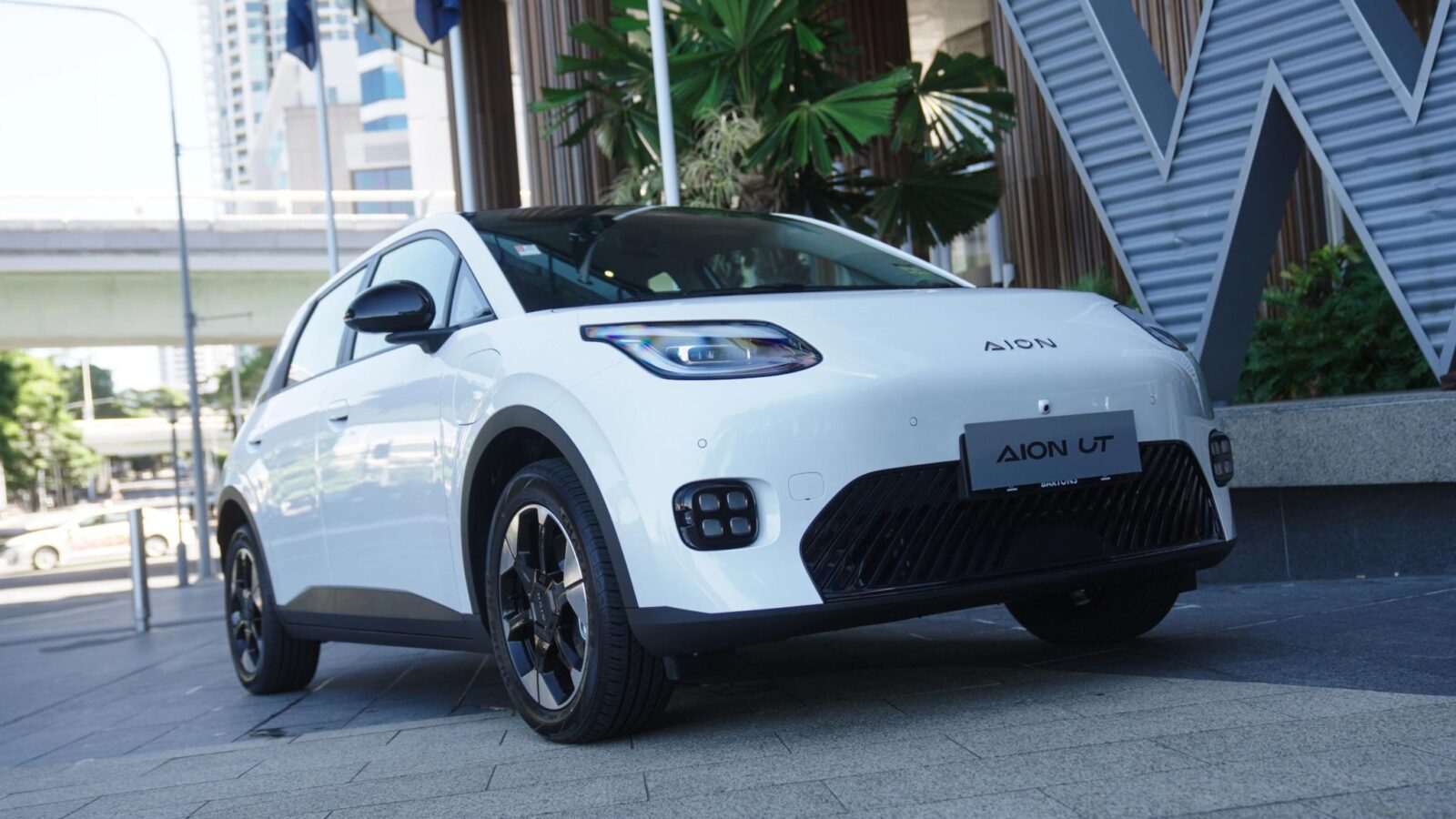
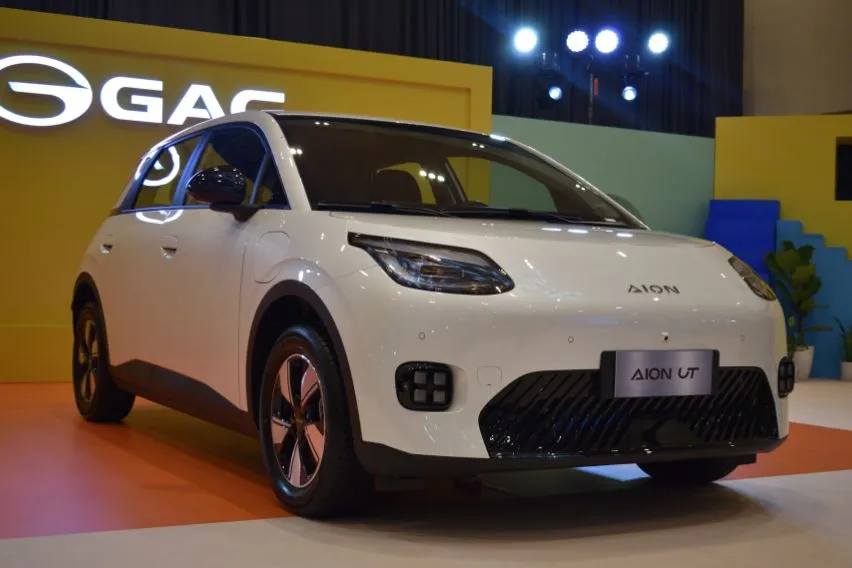
The Aion UT is the entry point into Lucky Motor Corporation’s (LMC) newly launched GAC electric vehicle lineup in Pakistan, positioned as a compact electric hatchback/crossover aimed at urban daily-use buyers rather than performance or premium-SUV shoppers. It sits below the larger Aion V and the upcoming Aion ES sedan in GAC’s local range, with the premium Hyptec HT models occupying the top tier.
Pricing
| Item | Amount (PKR) |
|---|---|
| Ex-factory price (Elite variant) | 6,399,000 |
| Booking amount | 1,000,000 |
The Aion UT has been priced at Rs. 6,399,000 with a booking amount of Rs. 1,000,000, making it the most accessible model in LMC’s four-vehicle GAC launch lineup. For context within the broader range: the Aion V is priced at Rs 8.899 million, the Hyptec HT at Rs 11.999 million, and the Hyptec HT Wing Version at Rs 13.999 million.
Market positioning: the aggressive Rs 6.399 million price point was intended to position the UT to draw buyers away from premium combustion-engine hatchbacks and compact sedans, putting it in competition with the KIA Stonic, Suzuki Fronx, Toyota Yaris, Honda City, and Hyundai Elantra (old shape) in the traditional ICE segment.
Early market reception: Despite the aggressive pricing, dealerships reported the UT struggled to convert showroom footfall into sales in its first days on sale, with buyer interest skewing toward the pricier Aion V and Hyptec HT models instead. Among EV-committed buyers specifically, the BYD Atto 2 has continued to outsell the UT despite carrying a roughly Rs 900,000 higher retail price and an open-market premium of Rs 200,000–400,000, largely on the strength of BYD’s stronger EV brand equity in Pakistan. This is a useful data point for a regional-beat piece: sticker price alone hasn’t been enough to convert the segment, and brand trust in EV technology appears to be doing more work than the balance sheet.
Full Specifications (Elite Variant)
Dimensions
| Metric | Value |
|---|---|
| Length × Width × Height | 4,270 × 1,850 × 1,575 mm |
| Wheelbase | 2,750 mm (“C-SUV level” per LMC) |
| Rear trunk space | 440 L |
The wheelbase-to-length ratio is the standout figure here — at 2,750 mm on a 4,270 mm footprint, GAC/LMC are explicitly marketing rear legroom and boot space as segment-beating for a car this compact, calling it “sedan-level boot capacity” in a C-SUV footprint.
Powertrain and Battery
| Metric | Value |
|---|---|
| Max power | 100 kW |
| Max torque | 145 Nm |
| Drivetrain | FWD |
| Battery chemistry | Lithium Iron Phosphate (LFP), GAC “Magazine Battery” architecture |
| Battery capacity | 44.12 kWh |
| Range (NEDC / WLTP) | 400 km / 335 km |
| Max AC charging | 6.6 kW |
| Max DC fast charging | 64 kW |
| 10–80% DC fast charge time | 40 minutes |
| Vehicle-to-Load (V2L) | Standard |
The NEDC/WLTP split (400 km vs 335 km) is worth flagging in any consumer-facing piece — WLTP is the more realistic real-world benchmark, and even that comes with LMC’s own disclaimer that quoted ranges assume ideal testing conditions.
Battery safety claims: The Magazine Battery design is marketed on three pillars — extreme fire resistance (rated up to 1,400°C), rapid cooling, and resistance to twisting/nail-penetration damage. LMC backs this with an 8-year/200,000 km battery warranty and an 8-year/160,000 km vehicle warranty (whichever comes first) — notably, on the battery warranty this slightly edges BYD’s standard local offering, which runs 8-year/160,000 km on the battery and 6-year/150,000 km on the vehicle.
Suspension and Ride
- Front: McPherson independent suspension
- Rear: Torsion-beam
- Tyre size: 215/60 R16
A torsion-beam rear axle is a cost-conscious choice consistent with the entry-level positioning — expected at this price point but worth noting for readers cross-shopping against independent rear suspension rivals.
Interior and Comfort
| Feature | Spec |
|---|---|
| Interior upholstery | Hi-Grade Fabric |
| Driver seat adjustment | Manual × 6 |
| Passenger seat adjustment | Manual × 4 |
| Rear view mirror | Day & Night |
| Climate control | Dual-Zone Automatic Air Conditioning |
| Interior colour | French Cream / Black |
| Cabin design notes | Rear leg roominess with “Bed Mode”; ergonomic comfort-oriented seating |
Entertainment and Technology
| Feature | Spec |
|---|---|
| Instrument cluster | 8.88″ digital |
| Infotainment display | 14.6″ |
| Smartphone integration | Apple CarPlay & Android Auto (standard) |
| Speakers | 6 |
Safety and Driver Assistance
| Feature | Spec |
|---|---|
| Airbags | 6 |
| Parking sensors | Front + Rear |
| Camera system | Surround View Monitor (SVM) |
| PM 2.5 filter | Standard |
| ADAS suite | ACC, ICA, AEB, FCW, LDW, LKA, ELKA, IHBC, BSD, DOW, RCW, RCTA (all standard) |
The full ADAS suite — including autonomous emergency braking, lane-keep assist, blind-spot detection, and rear cross-traffic alert — as standard rather than optional is genuinely notable at this price tier in the Pakistani market, where such features are typically reserved for higher trims or absent entirely in the sub-Rs 7 million segment.
Exterior
| Feature | Spec |
|---|---|
| Lighting | Automatic LED Lighting Package (Front + Rear), standard |
| Mirrors | Electric folding, heating, position memory, standard |
| Tailgate | Manual |
| Exterior colours | Emerald Green, Champs Elysees, Rocco White, Seine Silver, Monet Purple, Titian Red |
Design and Origin
- Designed at GAC’s Milan Design Center (European design influence, per LMC’s own positioning)
- Charging standard: EU Type 2 (AC) / CCS2 (DC) — relevant for compatibility with Pakistan’s still-nascent public charging infrastructure, most of which is being built around CCS2
Analytical Takeaways for Editorial Use
- Price-to-spec ratio is genuinely aggressive. Standard ADAS, dual-zone climate control, a 14.6″ infotainment screen, and V2L capability at Rs 6.399 million ex-factory undercuts most combustion hatchbacks with comparable feature counts — yet early sales data suggests spec sheets aren’t winning the segment on their own.
- The brand-trust gap is the real story. The BYD Atto 2 outselling the cheaper, better-specced (on paper) Aion UT is the more interesting data point than the price itself — it suggests Pakistani EV buyers are pricing in perceived reliability and resale value ahead of raw specification or even sticker price.
- Range disclosure matters. The NEDC figure (400 km) is the headline number LMC leads with, but WLTP (335 km) is the more defensible claim for a consumer-facing piece — worth flagging the gap explicitly rather than reproducing the NEDC number uncritically, especially given LMC’s own real-world variance disclaimer.
- Warranty is a genuine differentiator. The 8-year/200,000 km battery warranty is a strong local hook and slightly outflanks BYD’s standard offering — useful contrast material if benchmarking against the Atto 2/Atto 3.



Leave a comment