


For more than a century, automotive performance has been measured through familiar sensations.
The roar of an engine. The vibration through the steering wheel. The mechanical rhythm of shifting gears.
As the industry transitions toward electrification, many automakers have found themselves confronting an uncomfortable reality: electric vehicles are often faster than combustion cars, but speed alone does not guarantee emotional engagement.
Their solution has been surprisingly retro.
Synthetic engine sounds. Artificial gear shifts. Software-generated drama designed to mimic the experience of gasoline-powered performance cars.
BMW is taking a different path.
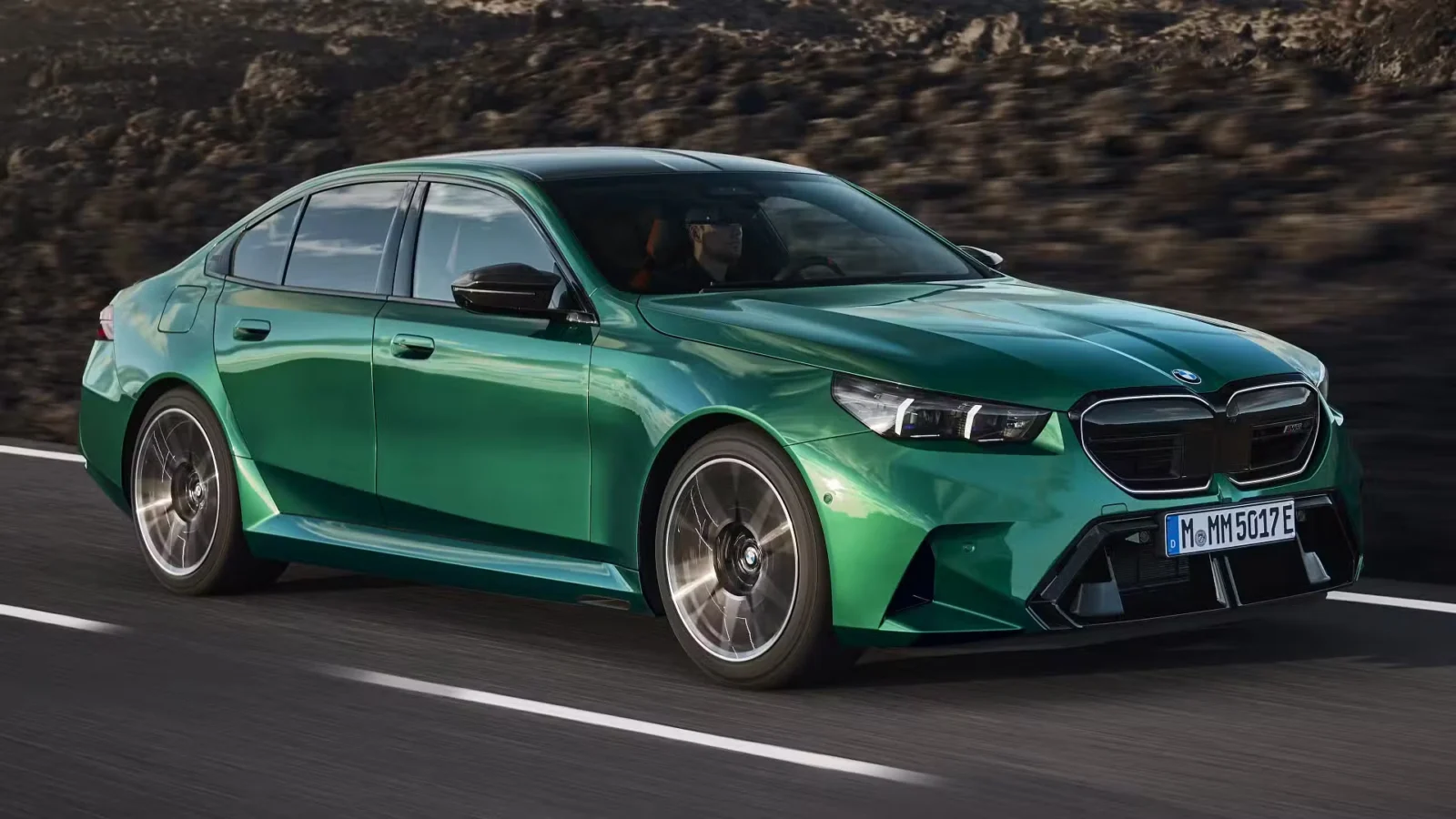
Rather than teaching its future performance EVs how to behave like V8-powered machines, the company is building an entirely new philosophy around what an electric performance car can become. At the center of that vision sits the upcoming BMW electric M3, arguably the most important performance vehicle BMW has developed since the original E30 M3 transformed the sports sedan market decades ago.
This next-generation BMW M3 EV is not attempting to recreate the past.
Instead, it is trying to redefine the future of driving engagement.
Why Other Automakers Are Simulating Gasoline Cars
The shift toward electrification has created a challenge that engineers never faced during the combustion era.
Electric motors are almost too perfect.
Instant torque delivery eliminates traditional power-band drama. Single-speed transmissions remove gear changes. Smooth acceleration erases many of the sensory cues drivers historically associated with performance.
Some manufacturers worry that removing those elements could make performance cars feel sterile.
As a result, the industry has increasingly embraced simulated experiences.
Several electric performance vehicles now feature artificial engine noises pumped through speakers. Others introduce software-generated shift points that mimic traditional transmissions. These systems deliberately interrupt smooth acceleration to create sensations familiar to enthusiasts.
The strategy makes commercial sense.
Performance-car buyers often have emotional attachments to combustion technology. Brands fear that an abrupt transition to silent, seamless EVs may alienate their most loyal customers.
Yet there is an inherent contradiction in this approach.
Electric vehicles possess capabilities that combustion engines simply cannot match. By forcing EVs to imitate gasoline cars, manufacturers risk limiting the very technologies that make electrification transformative.
The future of performance may require embracing new experiences rather than recreating old ones.
BMW appears to understand that better than most.
BMW’s Radical Philosophy
The philosophy guiding the BMW electric M3 begins with a simple question:
What if an electric vehicle did not need to behave like a gasoline car to feel exciting?
That question has become central to BMW M Division’s development strategy.
For decades, BMW M GmbH built its reputation around balance, precision, and driver involvement rather than sheer horsepower figures. Even as competitors pursued increasingly extreme power outputs, BMW often focused on chassis engineering, steering feel, and vehicle dynamics.
Those priorities are carrying into the EV era.
Instead of emphasizing artificial sounds or simulated combustion characteristics, BMW’s engineers are leveraging technologies unique to electrification.
The foundation for this transformation is BMW Neue Klasse.
The Neue Klasse platform represents far more than a new vehicle architecture. It serves as BMW’s next-generation technological ecosystem, integrating advanced battery architecture, software-defined vehicle capabilities, high-performance computing, and a radically new electric drivetrain strategy.
Unlike many legacy EV platforms that adapted existing technologies, Neue Klasse was conceived specifically for the electric age.
This gives BMW greater flexibility in optimizing weight distribution, energy efficiency, chassis engineering, and electric driving dynamics.
For BMW M engineers, the objective is not nostalgia.
It is creating new forms of excitement.
The Technology That Makes the Electric M3 Special
The most fascinating aspect of the BMW electric M3 may be invisible to most drivers.
Its intelligence.
Industry reports and development previews suggest BMW is exploring an advanced quad motor system capable of controlling power delivery with extraordinary precision.
Traditional all-wheel-drive systems distribute torque through mechanical components.
A quad-motor architecture changes the equation entirely.
Each wheel can receive independently controlled power inputs measured in milliseconds.
This dramatically expands the possibilities of torque vectoring.
Imagine entering a corner at speed.
Instead of relying primarily on brakes and suspension adjustments, the vehicle continuously redistributes power between all four wheels. The system can enhance rotation, improve stability, and maximize grip simultaneously.
The result is vehicle dynamics that would be impossible with conventional drivetrains.
This is where software becomes as important as hardware.
BMW increasingly describes future vehicles as software-defined vehicles. In practical terms, that means performance tuning evolves through sophisticated algorithms rather than purely mechanical engineering.
The electric M3’s control systems will likely process vast amounts of real-time information including:
- Steering angle
- Wheel speed
- Tire grip
- Road surface conditions
- Driver inputs
- Battery performance
- Suspension movement
Every millisecond, the vehicle can optimize behavior based on those variables.
Battery technology is equally important.
BMW’s next-generation EV battery technology is expected to deliver higher energy density, improved thermal management, faster charging capability, and greater electric vehicle range.
For performance vehicles, thermal efficiency matters as much as outright capacity.
Many high-performance EVs deliver astonishing acceleration for brief periods before reducing output due to heat buildup. BMW’s challenge is ensuring sustained performance during demanding driving scenarios, including Nürburgring testing and extended track sessions.
Advanced cooling systems and improved battery architecture will play a crucial role.
Combined with adaptive suspension systems and next-generation chassis engineering, the electric M3 could become one of the most sophisticated performance machines BMW has ever produced.
Why an Electric M3 Could Be More Engaging Than a Traditional M3
This may sound controversial among enthusiasts.
Yet there are legitimate reasons why a BMW electric M3 could ultimately prove more engaging than its combustion-powered predecessor.
The first is responsiveness.
Internal combustion engines require time to build power. Even exceptional turbocharged engines introduce small delays.
Electric motors do not.
Instant torque provides immediate acceleration the moment a driver touches the throttle.
The second advantage is precision.
Because electric motors can adjust output almost instantaneously, engineers gain unprecedented control over vehicle behavior.
Every corner becomes an opportunity for software-enhanced driving engagement.
Third is consistency.
Traditional performance cars can experience power fluctuations caused by altitude, temperature, and mechanical stress.
A properly engineered high performance EV maintains remarkably predictable performance characteristics.
Fourth is confidence.
Modern performance driving increasingly depends on extracting maximum capability without overwhelming the driver.
Advanced electric torque delivery systems can provide greater control while preserving excitement.
The goal is not removing challenge.
The goal is creating a deeper connection between driver intention and vehicle response.
That distinction may define the next generation BMW experience.
How BMW Plans to Beat Tesla and Porsche
The luxury EV market is becoming intensely competitive.
BMW faces formidable rivals.
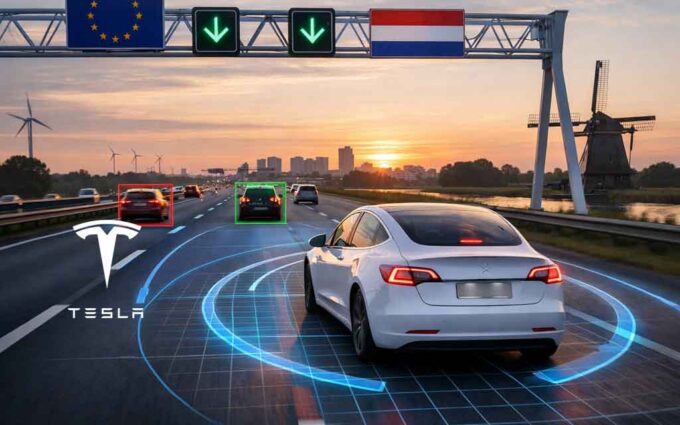
The Tesla Model 3 Performance emphasizes acceleration and software integration.
The Tesla Model S Plaid focuses on headline-grabbing straight-line speed.
The Porsche Taycan and Porsche Taycan Turbo GT prioritize chassis sophistication and track capability.
The Lucid Air Sapphire combines extraordinary power with luxury refinement.
Meanwhile, competitors such as Mercedes-AMG and the Audi RS e-tron GT continue expanding the electric sports sedan category.
BMW’s strategy differs in a critical way.
Rather than chasing acceleration records, BMW appears focused on delivering superior driving feel.
This distinction matters.
Acceleration is easy to measure.
Driving engagement is not.
Historically, BMW’s greatest successes emerged from vehicles that felt alive beneath the driver rather than merely fast on paper.
If the BMW electric M3 succeeds, it will likely do so by combining:
- Superior weight distribution
- Advanced torque vectoring
- Refined steering calibration
- Intelligent software integration
- Consistent track performance
- Everyday usability
Tesla may continue winning drag races.
Porsche may dominate certain track benchmarks.
BMW’s objective appears to be creating the most rewarding electric sports sedan to drive every day.
That is a different competition entirely.
The Future of BMW M Cars
Electrification is reshaping the performance landscape faster than many enthusiasts anticipated.
Yet BMW’s future extends beyond simply replacing engines with batteries.
The company’s broader vision involves software-defined performance.
Future M vehicles may receive substantial capability upgrades through software updates. Driving modes could evolve. Chassis responses could improve. Performance characteristics may become increasingly customizable.
This represents a profound shift in automotive engineering.
Historically, performance was largely fixed at the moment a vehicle left the factory.
Tomorrow’s M cars may continue evolving throughout their lifecycles.
The implications extend beyond BMW.
As electric vehicle innovation accelerates, the entire industry must reconsider traditional definitions of performance.
Horsepower alone will no longer be enough.
The winners will be manufacturers capable of integrating software, battery technology, electric drivetrains, and driver psychology into a cohesive experience.
BMW believes it can be one of those winners.
What Industry Experts Are Missing
Much of today’s EV discussion focuses on the wrong question.
Analysts frequently ask whether electric vehicles can replace gasoline performance cars.
That framing misunderstands the opportunity.
The most successful future performance vehicles will not be replacements.
They will be successors.
The original M3 succeeded because it did not imitate previous sports sedans. It introduced new standards for balance, handling, and usability.
The electric M3 could follow the same path.
The true breakthrough may not be acceleration figures or battery capacity.
It may be the emergence of entirely new forms of driving engagement enabled by software-controlled vehicle dynamics.
Many observers still evaluate EVs through combustion-era metrics.
BMW appears to be evaluating them through future-era possibilities.
That distinction could prove decisive.
Conclusion
The BMW electric M3 represents one of the automotive industry’s most intriguing experiments.
Not because it is electric.
Not because it may be extraordinarily fast.
And not because it will likely incorporate some of the most advanced EV performance technology ever installed in a production sports sedan.
Its significance lies elsewhere.
Most manufacturers entering the electric age are trying to preserve familiar sensations from the past.
BMW is attempting something more ambitious.
It is exploring what performance can become when engineers stop asking how an EV can imitate a V8 and start asking what an EV can do that a V8 never could.
That shift in thinking may ultimately define the future of performance cars.
The BMW electric M3 is not trying to be the world’s best V8 replacement.
It is trying to redefine what driving excitement means in the electric era.



Leave a comment