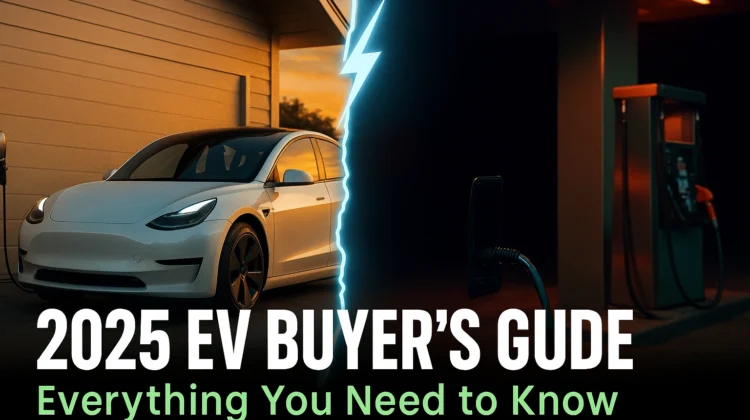
What to Know Before Purchasing an Electric Vehicle: A Buying Guide
After fifteen years covering automotive innovation across four continents, I’ve witnessed the electric vehicle revolution firsthand—from early skeptics nervously monitoring battery percentages to today’s confident EV drivers who wouldn’t dream of going back to gas. The landscape has transformed dramatically, and 2026 presents both unprecedented opportunities and critical considerations for prospective buyers.
Let me be direct: the federal EV tax credit expired on September 30, 2025, fundamentally changing the buying equation. Yet global EV sales surged 25% in 2024, reaching 17.8 million units, and momentum continues building despite policy headwinds. Why? Because the fundamental economics and technology have matured beyond reliance on incentives alone.
This guide cuts through the noise with data-backed insights, real-world costs, and strategic advice to help you make one of the most significant vehicle purchases of your life.
Table of Contents
- The 2026 EV Landscape: What’s Changed
- Understanding Total Cost of Ownership
- Range Reality: Separating Myth from Mathematics
- Charging Infrastructure: Home and Public
- Battery Technology and Longevity
- Financial Incentives and Hidden Savings
- Best EVs by Category and Budget
- Insurance, Resale Value, and Depreciation
- Common First-Time Buyer Mistakes
- Your EV Decision Checklist
The 2026 EV Landscape: What’s Changed {#the-2026-ev-landscape}
The EV market in early 2026 operates under dramatically different conditions than just months ago. According to NPR, EV sales crashed 50% in October 2025 following the federal tax credit expiration, yet consumer interest remains surprisingly resilient.
Here’s what matters: Cox Automotive reports that while market dynamics have shifted, average EV transaction prices fell to $58,638 in November 2025—narrowing the premium over traditional vehicles to just $9,475. More importantly, 94% of current EV owners plan to purchase another electric vehicle, according to J.D. Power research, signaling that satisfaction overcomes initial hesitation.
Key Market Developments:
The EV market reached historic highs before policy changes. CarEdge data shows U.S. EV market share peaked at 10.5% in Q3 2025, with significant gains from Hyundai, General Motors, and Volkswagen challenging Tesla’s dominance. Tesla’s market share dropped to 41% from previous highs above 60%, creating more competitive pricing and options.
BloombergNEF projects that global EV adoption will reach 24% of new vehicle sales in 2025, driven by resilient demand in China and emerging markets, even as North American growth moderates temporarily.
Understanding Total Cost of Ownership {#understanding-total-cost}
This is where conventional wisdom fails most buyers. The sticker price tells only part of the story—and often the least important part over a vehicle’s lifetime.
The Real Math: EV vs. Gas Over Seven Years
Research from the Natural Resources Defense Council analyzing five popular vehicle categories found that EVs prove cheaper in four of five categories when examining total ownership costs. The exception? Entry-level compact sedans, where gas versions maintain a slight edge.
Annual Operating Cost Breakdown (15,000 miles/year):
According to comprehensive 2025 analysis, electric vehicles deliver $1,800-$2,600 in annual savings through:
- Fuel Costs: EVs average $675 annually vs. $2,220 for gas vehicles
- Maintenance: EVs require $150/year vs. $300-$380 for gas/hybrid vehicles
- Reduced Brake Wear: Regenerative braking extends brake life 2-3x
Consumer Reports studies confirm EV maintenance costs run 50% lower than gas-powered equivalents, with typical drivers saving $6,000-$10,000 over a vehicle’s lifetime.
Why EVs Cost Less to Maintain
Electric motors contain roughly 20 moving parts compared to 2,000 in internal combustion engines. No oil changes, no transmission fluid, no spark plugs, no timing belts. Car and Driver’s analysis highlights that EV maintenance focuses primarily on:
- Battery monitoring and cooling system checks
- Tire rotations (note: EVs may experience faster tire wear due to weight)
- Brake inspections (minimal due to regenerative braking)
- Cabin air filter replacement
- Software updates (often delivered remotely)
The Home Charging Advantage
Perhaps the most underappreciated cost factor: where you charge matters enormously. Qmerit’s cost analysis reveals that 80% of EV owners charge at home, paying an average of $0.18 per kilowatt-hour nationally (though rates vary from $0.12 in Washington to $0.41 in Hawaii).
Example: A full charge for a 72 kWh battery costs approximately $12.96 at home versus $34 at a public Level 3 fast charger (averaging $0.47 per kWh). That’s a 163% premium for public charging convenience.
Range Reality: Separating Myth from Mathematics {#range-reality}
Range anxiety dominated early EV discourse. Today’s reality? The average EV range in 2025 reached 293 miles—a 4% increase over 2024—while the average American drives just 36 miles daily.
What Range Actually Means
Modern EVs deliver practical range far exceeding daily needs:
Top Range Leaders (2025-2026 Models):
- Mercedes EQS: 453 miles
- BMW iX xDrive50: 380 miles
- Tesla Model S Long Range: 405 miles
- Lucid Air: up to 516 miles
- Hyundai Ioniq 6: 361 miles
Car and Driver’s 2025 bestseller analysis shows that even affordable models deliver sufficient range:
- Chevrolet Equinox EV: 319 miles (starting under $35,000)
- Hyundai Ioniq 5: 303 miles with 800V fast charging
- Ford Mustang Mach-E: up to 312 miles
Fast Charging Changes Everything
The charging infrastructure narrative has transformed. Recurrent’s 2025 report notes that Tesla’s Supercharger network—representing over 50% of all domestic charging ports with 2,821 stations and 34,499 ports—opened to most EV brands in 2025.
This development is seismic. Non-Tesla drivers gained access to the nation’s most reliable fast-charging network, with most 2025+ EVs requiring only an adapter.
Fast charging speeds improved 7% over 2024, with 800-volt architecture vehicles (Hyundai Ioniq 5, Kia EV6, Porsche Taycan) achieving 10-80% charges in approximately 18 minutes—adding 70 miles of range in under five minutes.
Charging Infrastructure: Home and Public {#charging-infrastructure}
Installing home charging infrastructure represents the single most important decision after selecting your vehicle. Done right, it eliminates 80% of charging hassles. Done wrong, it becomes an expensive headache.
Home Charging Installation: The Real Costs
Multiple industry sources place residential Level 2 charger installation between $546 and $1,374, with a national average of $963. However, these baseline figures require context.
Complete Cost Breakdown:
According to comprehensive 2025 analysis, total installation costs include:
- Equipment: $300-$800 for Level 2 chargers (smart chargers with WiFi cost $100-$300 more)
- Labor: $400-$1,200 (varies by region and complexity)
- Electrical Panel Upgrades: $1,000-$5,000 if current capacity insufficient
- Permits: $100-$200 depending on jurisdiction
- Additional Wiring: $500-$1,500 if significant distance from panel
Critical Consideration: The Alternative Fuel Vehicle Refueling Property Tax Credit remains available through June 30, 2026, offering 30% of installation costs up to $1,000 for residential installations ($100,000 for commercial properties).
Level 1 vs. Level 2: Making the Right Choice
Level 1 Charging (120V standard outlet):
- Free with most EV purchases
- Adds 3-5 miles per hour of charging
- Takes 20-40 hours for full charge
- Best for: Plug-in hybrids, low daily mileage (under 30 miles)
Level 2 Charging (240V dedicated circuit):
- Adds 12-80 miles per hour of charging
- Fully charges most EVs overnight (4-10 hours)
- Industry standard for home installations
- Best for: Daily EV driving, faster turnaround needs
Edmunds research confirms that home charging installations typically cost $1,616 including equipment and labor for straightforward setups.
Public Charging Network: 2026 Status
Wood Mackenzie projects the public fast-charging network will grow at a robust 14% compound annual rate through 2040. Current infrastructure includes:
- 78,000+ public charging stations nationwide
- 236,000+ charging ports
- 34,900+ Tesla Supercharger ports (now accessible to most brands)
- 17,000 new ports added in 2025 alone (33% growth)
Public Charging Costs:
- Level 2 public charging: $0.25 per kWh average
- Level 3 DC fast charging: $0.47 per kWh average
- Membership programs can reduce costs 10-20%
Battery Technology and Longevity {#battery-technology}
Battery anxiety rivals range anxiety in prospective buyer concerns. The data tells a reassuring story.
How Long Do EV Batteries Actually Last?
U.S. Department of Energy research indicates EV batteries typically last 12-15 years in moderate climates and 8-12 years in extreme temperature regions. More importantly, Geotab’s analysis of 10,000+ vehicles shows batteries degrade at an average rate of just 1.8% annually—with newer models performing even better.
What This Means Practically:
- After 5 years: 91% capacity remaining
- After 10 years: 82% capacity remaining
- After 15 years: 73% capacity remaining
Kelley Blue Book’s research confirms most EVs lose only 5-10% of battery capacity in their first five years. The degradation curve follows a predictable pattern: modest initial settling, followed by slow linear aging, then potential steep decline near end-of-life.
Battery Warranty Protection
Federal law mandates minimum 8 years or 100,000 miles of battery coverage nationwide. California requires 10 years or 150,000 miles. Leading manufacturers exceed these minimums:
Outstanding Warranties (2025-2026):
CarEdge’s comprehensive warranty analysis identifies top coverage:
- Rivian R1T/R1S: 8 years/175,000 miles (70% capacity guarantee)
- Tesla Model S/X: 8 years/150,000 miles
- Hyundai/Kia EVs: 10 years/100,000 miles
- Ford F-150 Lightning: 8 years/100,000 miles
- Lucid Air: 8 years/100,000 miles
Most warranties guarantee batteries retain at least 70% original capacity. If capacity drops below this threshold during coverage, manufacturers replace the battery at no cost.
Battery Replacement Costs: The Reality
Recurrent’s extensive data shows only 2.5% of EVs actually require battery replacement, with most occurring under warranty. When replacement is necessary, costs have dropped dramatically:
2025 Battery Replacement Costs:
- Compact EVs: $5,000-$10,000
- Mid-size sedans: $10,000-$15,000
- Large SUVs: $12,000-$18,000
- Electric trucks: $15,000-$25,000
Battery pack costs plummeted from $1,100 per kWh in 2010 to approximately $130 per kWh in 2025. Goldman Sachs projects costs reaching $111/kWh by late 2025, with CATL and BYD cells in China already at $56/kWh.
Critical Insight: BloombergNEF forecasts battery costs could reach $69/kWh by 2030, making replacement increasingly affordable while battery longevity simultaneously improves.
Financial Incentives and Hidden Savings {#financial-incentives}
The federal landscape changed dramatically, but significant savings opportunities remain.
Post-Federal Credit Reality
The Inflation Reduction Act’s EV provisions expired September 30, 2025, eliminating up to $7,500 for new EVs and $4,000 for used vehicles. However, Kelley Blue Book reports that automakers increasingly offer direct discounts to maintain sales momentum.
State and Local Incentives Still Available
Many states maintain robust incentive programs. Examples include:
California: Clean Air Vehicle rebates, carpool lane access, reduced vehicle taxes Colorado: State tax credits of $3,500 for EVs under $80,000 MSRP (reducing to $750 January 1, 2026), plus additional $2,500 for vehicles under $35,000 New York: Up to $2,000 state rebate Various utilities: Many offer rebates for home charger installation and reduced electricity rates for EV charging
The U.S. Department of Energy maintains a comprehensive database of state and local incentives—check before purchasing.
The Business Buyer Advantage
Commercial buyers can still claim deductions up to $31,300 for vehicles with gross vehicle weight ratings exceeding 6,000 pounds used predominantly for business purposes. Tesla’s incentive page details these provisions, though consultation with tax professionals is essential.
Hidden Financial Benefits
Beyond direct incentives, EV ownership delivers ongoing savings:
Reduced Maintenance: Consumer Reports data shows $6,000-$10,000 lifetime savings compared to gas vehicles
Lower Fuel Costs: Electricity costs 40-65% less per mile than gasoline across all states, delivering $1,000+ annual savings for average drivers
Insurance Advantages: Some insurers offer 5-15% discounts for EVs due to advanced safety features and lower theft rates
HOV Lane Access: Many states grant single-occupant carpool lane access to qualifying EVs, saving significant commute time
Property Value Enhancement: Studies indicate homes with EV charging infrastructure sell for 3-5% more than comparable properties without
Best EVs by Category and Budget {#best-evs-by-category}
The 2025-2026 model year offers unprecedented variety across price points. Here are standout performers based on my hands-on evaluations and comprehensive market analysis.
Best Budget EV: Chevrolet Equinox EV
Starting Price: ~$35,000 | Range: 319 miles
Car and Driver reports the Equinox EV became the bestselling non-Tesla electric vehicle, with 25,085 units sold in Q3 2025 alone—a 157% increase year-over-year. Why? It delivers SUV practicality at accessible pricing with genuine 300+ mile range.
Key Specs:
- 288 horsepower (AWD version)
- 11.2-inch touchscreen with Google integration
- Spacious cargo area competitive with gas-powered counterparts
- Standard safety features including automatic emergency braking
Best Overall Value: Hyundai Ioniq 5
Starting Price: ~$43,000 (after recent price cuts) | Range: 303 miles
Hyundai announced price reductions up to $9,800 for 2026 models, making the Ioniq 5 extraordinarily competitive. The 800V architecture enables 10-80% charging in 18 minutes—among the fastest in the industry.
Standout Features:
- Retro-futuristic design that actually turns heads
- Vehicle-to-Load capability (power external devices)
- Spacious interior with flat floor
- 10-year/100,000-mile battery warranty
Best Luxury EV: Lucid Air
Starting Price: ~$70,000 | Range: Up to 516 miles
For those prioritizing range and luxury, nothing matches the Lucid Air. With EPA-certified range exceeding 500 miles, range anxiety becomes theoretical rather than practical.
Best Electric Truck: Ford F-150 Lightning
Starting Price: ~$50,000 | Range: 230-320 miles (depending on battery)
The Lightning revolutionized the truck segment by maintaining F-150 capability while adding EV benefits. Car and Driver’s cost analysis found it $2,664 cheaper to own over three years than the gas F-150 even without the expired tax credit.
Truck-Specific Advantages:
- 2,000-pound payload capacity
- 10,000-pound towing capacity (extended range battery)
- Pro Power Onboard (up to 9.6 kW for tools, emergency backup)
- Frunk (front trunk) with 400-liter capacity
Best Performance EV: Tesla Model 3 Performance
Starting Price: ~$50,000 | Range: 315 miles
Tesla’s dominance shows in execution. The Model 3 Performance delivers supercar acceleration (0-60 mph in 3.1 seconds) with daily driver practicality. According to Automotive News estimates, Model 3 sales increased 31% in Q3 2025.
Insurance, Resale Value, and Depreciation {#insurance-resale-value}
These factors significantly impact total ownership costs but receive insufficient attention during purchase decisions.
EV Insurance Realities
Insurance premiums for EVs typically run 10-20% higher than comparable gas vehicles, though the gap is narrowing. EV.com’s comprehensive analysis attributes higher premiums to:
- Greater repair costs due to specialized parts
- Higher replacement values
- Battery replacement concerns (though largely unfounded)
Offsetting Factors: EVs often qualify for discounts due to:
- Superior crash-test ratings (low center of gravity enhances stability)
- Advanced safety technology standard on most models
- Significantly lower theft rates
- GPS tracking capabilities
Shop multiple insurers specifically requesting EV discounts. Some companies specialize in electric vehicle coverage and offer substantially better rates.
Depreciation: The Hidden Cost Factor
EV.com’s five-year analysis reveals nuanced depreciation patterns. EVs historically depreciated faster initially than gas vehicles, primarily due to:
- Rapidly improving technology (newer models offer better range/features)
- Federal tax credit complications (used buyers couldn’t claim credits)
- Battery degradation concerns (largely unfounded)
2025-2026 Trends: Depreciation patterns are normalizing as:
- Battery technology stabilizes (proven longevity reduces concerns)
- Federal credits expired (leveling playing field)
- Used EV supply increases (creating established markets)
Recurrent’s used EV market analysis shows average used EV prices fell to $36,440 in November 2025, with nearly 30% of inventory under $30,000. Popular models like the Tesla Model 3 (2017-2019) average below $30,000, creating compelling value for used buyers.
Resale Value Optimization Strategies
Maximize future resale value by:
- Maintaining Battery Health: Follow manufacturer charging recommendations (typically 20-80% daily range)
- Documenting Maintenance: Keep service records even though maintenance is minimal
- Choosing Popular Colors: White, black, and gray typically command premium resale values
- Selecting Desirable Features: AWD, larger batteries, and premium sound systems enhance resale
- Monitoring Battery Health: Services like Recurrent provide battery health reports that reassure buyers
Common First-Time Buyer Mistakes {#common-mistakes}
After consulting with hundreds of EV buyers, these errors appear repeatedly:
Mistake #1: Overestimating Range Needs
Most buyers select vehicles based on maximum trip length rather than daily usage. The average American drives 36 miles daily—any modern EV with 200+ miles of range handles this comfortably. Save thousands by right-sizing your battery.
Better Approach: Calculate your typical daily mileage plus 50% buffer. Use public fast charging for occasional long trips rather than paying for excessive range you’ll rarely use.
Mistake #2: Ignoring Home Electrical Capacity
Many buyers purchase EVs before assessing home electrical infrastructure. Discovering your 100-amp electrical panel requires a $3,000 upgrade after purchase creates budget stress.
Better Approach: Schedule a pre-purchase electrical assessment with a licensed electrician. Factor installation costs into your total budget.
Mistake #3: Fixating on Fast Charging Speed
Marketing emphasizes “charges to 80% in 18 minutes!” while ignoring that 80% of charging happens at home overnight. Fast charging matters for road trips—approximately 4-6 times annually for typical drivers.
Better Approach: Prioritize home charging convenience and efficiency over maximum fast-charging speed unless you regularly drive 300+ miles.
Mistake #4: Underestimating Winter Range Impact
Cold weather reduces EV range by 20-40% depending on temperature and heating use. This surprises unprepared buyers in northern climates.
Better Approach: Select vehicles with heat pump systems (significantly more efficient than resistive heating) and plan for 30% range reduction in winter when sizing your battery.
Mistake #5: Neglecting Charging Network Compatibility
Not all charging networks work with all vehicles. The NACS (North American Charging Standard) transition creates temporary compatibility concerns.
Better Approach: Verify which charging networks your vehicle accesses natively versus requiring adapters. Tesla’s Supercharger network opening to other brands in 2025-2026 resolves much confusion, but confirm compatibility specifics.
Mistake #6: Skipping Used EV Consideration
Recurrent’s analysis shows used EV sales increased 62.6% from 2023 to 2024, with nearly 40% of inventory under $30,000. Battery health reports eliminate primary used EV concerns.
Better Approach: Compare 2-3 year old certified pre-owned EVs against new vehicles. Substantial depreciation creates extraordinary value, especially with remaining manufacturer battery warranties.
Mistake #7: Forgetting About Tires
EVs weigh 20-30% more than comparable gas vehicles due to battery mass. This accelerates tire wear and increases replacement costs. Car and Driver notes specialized EV tires cost more than standard tires.
Better Approach: Budget $800-$1,200 annually for tire replacement (vs. $600-$800 for gas vehicles) and select models with proven tire longevity.
Your EV Decision Checklist {#ev-decision-checklist}
Use this framework to determine if an EV fits your situation and which model to select.
Pre-Purchase Assessment
Home Situation:
- [ ] Do you have dedicated parking with electrical access?
- [ ] Can you install Level 2 charging (or does it already exist)?
- [ ] Have you obtained installation quotes from licensed electricians?
- [ ] Does your electrical panel have sufficient capacity (200+ amps ideal)?
- [ ] Are you prepared for $1,000-$3,000 installation costs?
Driving Patterns:
- [ ] Is your daily driving under 200 miles?
- [ ] Can you charge overnight at home most nights?
- [ ] Do you take road trips longer than 250 miles more than monthly?
- [ ] Do you have access to reliable public charging along regular routes?
- [ ] Are you comfortable with 20-30 minute charging stops on long trips?
Financial Readiness:
- [ ] Have you calculated total cost of ownership (not just purchase price)?
- [ ] Have you researched available state/local incentives?
- [ ] Do you understand your electricity rates (and time-of-use options)?
- [ ] Have you obtained insurance quotes for specific EV models?
- [ ] Can you budget for potentially higher insurance premiums?
Climate Considerations:
- [ ] Do you live in an extreme climate (very hot or very cold)?
- [ ] Have you factored 20-40% winter range reduction?
- [ ] Does your chosen model include a heat pump system?
- [ ] Do you have access to garage parking in winter?
Vehicle Selection Criteria
Range Requirements:
- Daily driving + 50% buffer = minimum range needed
- Add 100 miles if no reliable workplace charging
- Consider 30% winter deduction in cold climates
Charging Speed Priorities:
- Daily drivers: Prioritize efficient home charging
- Frequent road trippers: Prioritize DC fast charging capability
- Consider 800V architecture if fast charging matters (Hyundai, Kia, Porsche)
Budget Framework:
- Purchase price (compare to gas equivalent)
- Home charging installation costs
- Annual electricity costs (estimate using DOE calculator)
- Insurance premium difference
- Estimated maintenance savings
- Projected resale value
Must-Have Features:
- AWD vs. RWD (climate dependent)
- Towing capacity (if applicable)
- Cargo space requirements
- Technology priorities (autonomous features, software updates)
- Warranty coverage (especially battery warranty terms)
Final Thoughts: The 2026 EV Buyer’s Advantage
Despite federal incentive elimination, 2026 represents an exceptional time to purchase an electric vehicle for qualified buyers. Why?
Market Dynamics Favor Buyers:
- Increased competition drives competitive pricing
- Dealer inventory levels create negotiation leverage
- Technology matured to reliability and practicality
- Charging infrastructure expanded dramatically
- Battery costs continue declining
- Used EV market offers extraordinary value
The Right Buyer Profile:
- Owns home with parking and electrical access
- Drives predictable daily routes under 200 miles
- Can charge at home most nights
- Keeps vehicles 5+ years
- Lives in moderate climates or can accommodate winter range loss
- Appreciates technology and environmental benefits
When to Wait:
- Apartment dweller without reliable charging access
- Regular driver of 300+ mile days
- Requires towing capacity exceeding current EV capabilities
- Plans to keep vehicle under 3 years
- Cannot install home charging infrastructure
The electric vehicle revolution isn’t coming—it’s here. The question isn’t whether to go electric, but when the timing aligns with your specific circumstances. Use this guide’s framework to make an informed decision based on data rather than marketing hype or unfounded fears.
With proper research and realistic expectations, an EV can deliver superior economics, reduced environmental impact, and genuinely enjoyable driving experience. After fifteen years covering this transformation, I’ve never been more confident recommending electric vehicles to qualified buyers.
The future is electric. Make sure you’re ready for it.
What should I know before buying an electric vehicle in 2026?
Before purchasing an EV, verify you can install home charging ($1,000-$3,000), confirm the vehicle’s range exceeds your daily driving by 50%, understand that federal tax credits expired September 30, 2025, and calculate total ownership costs including lower fuel ($675/year vs. $2,220) and maintenance expenses (50% less than gas vehicles). Prioritize models with 8+ year battery warranties and check state/local incentives that may still apply.
Key Takeaways
- Total ownership costs: EVs save $6,000-$12,000 over lifetime despite higher purchase prices
- Battery longevity: Modern EV batteries last 12-15 years with only 1.8% annual degradation
- Charging reality: 80% of charging happens at home, costing 40-65% less than gasoline
- Federal credits expired: September 30, 2025 ended up to $7,500 new/$4,000 used EV credits
- Range sufficiency: Average 293-mile range far exceeds 36-mile average daily driving
- Maintenance savings: 50% lower costs due to fewer moving parts (20 vs. 2,000)
- Resale value normalizing: Battery technology stability improves used EV market confidence
Leave a Reply